Hi there.
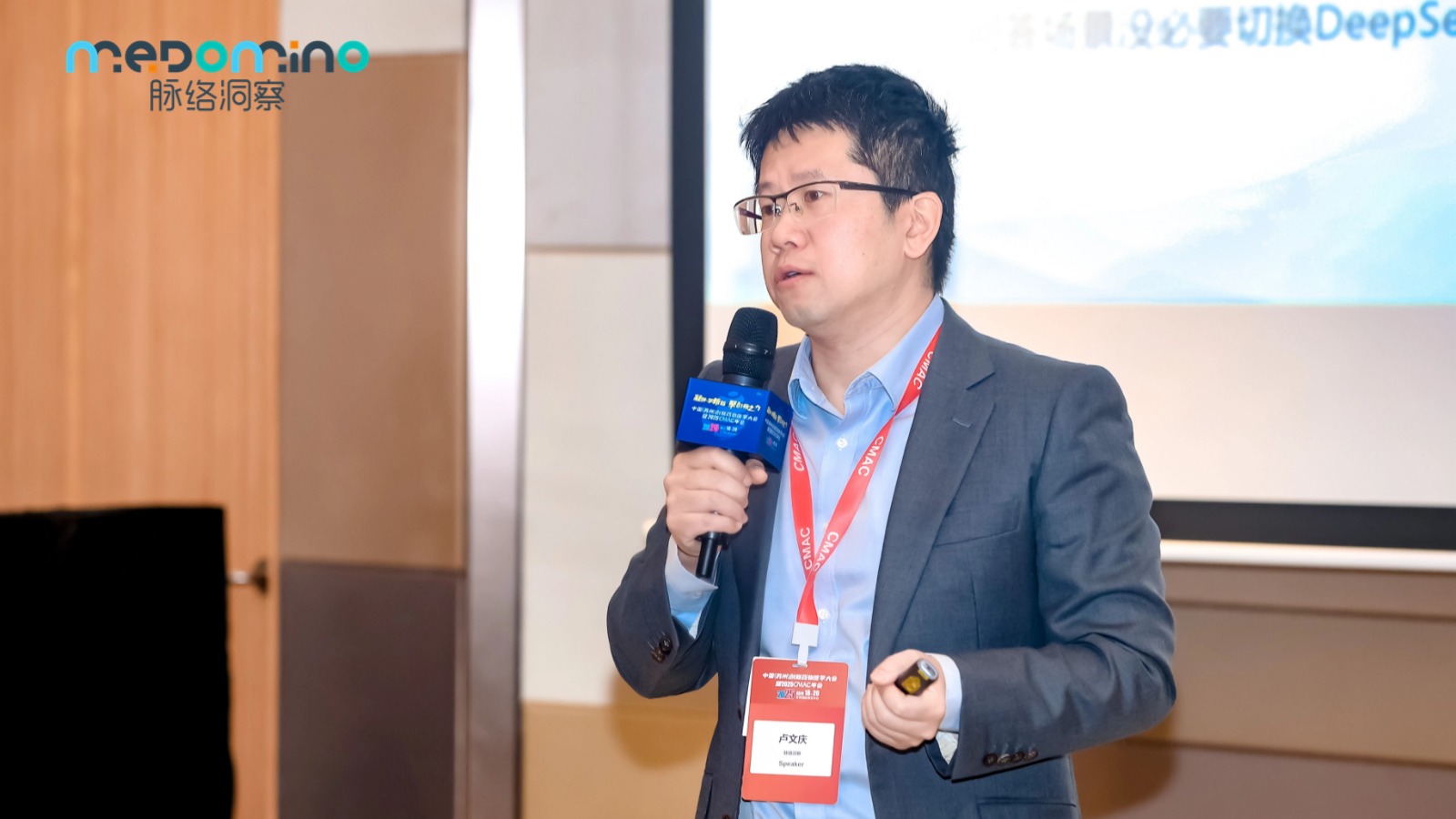
A few days ago at this year's CMAC annual meeting, we ran an AI vs. human debate. Without bragging too much, this debate was completely different from some other so-called AI debate events.
- "Using AI to write debate scripts" is essentially just AI's text generation capability.
- "Letting DeepSeek, Doubao, or similar models simulate debaters and refute user views" is essentially just AI's conversational capability.
Ours was different.
First, our setup was quite close to a standard debate format, with the two sides arranged as follows:
Affirmative: four human debaters
Negative: four AI debaters plus one AI commander
The debate had two rounds with the same motion: "Will AIGC applications lead to layoffs at pharma and medtech companies?"
Round 1
Affirmative: Human - No
Negative: AI - Yes
Model: Doubao General Model Pro
Round 2
Affirmative: Human - Yes
Negative: AI - No
Model: DeepSeek-R1
Debate Flow
Affirmative first speaker - Negative first speaker
...
Affirmative fourth speaker - Negative fourth speaker
AI summarizes the above views
Free debate, with both sides speaking in turn
Second, this was a real offline debate environment, with nearly 100 people watching on site and the entire event livestreamed online. By the time this article was written, online views had already reached 14,000.

This article teaches you how to build an AI vs. human debate. Intro over. Let's get to the real work.
Tool needed: www.coze.cn.
This AI vs. human debate was built on the Coze platform as an AI debate agent, namely the AI commander.

Official description: Coze is a new-generation AI application development platform. Whether or not you have a programming background, you can quickly build many types of large-model-based AI applications on Coze...
Coze also provides an official setup tutorial, so I will not spend too much time on basic operations. Instead, I will focus on practical experience for building an AI vs. human debate.
Step 1: Create an Agent
Enter the Coze backend, click the plus icon in the upper-left corner, choose "Create Agent," give your agent a name, write a short introduction, choose an avatar, confirm, and go.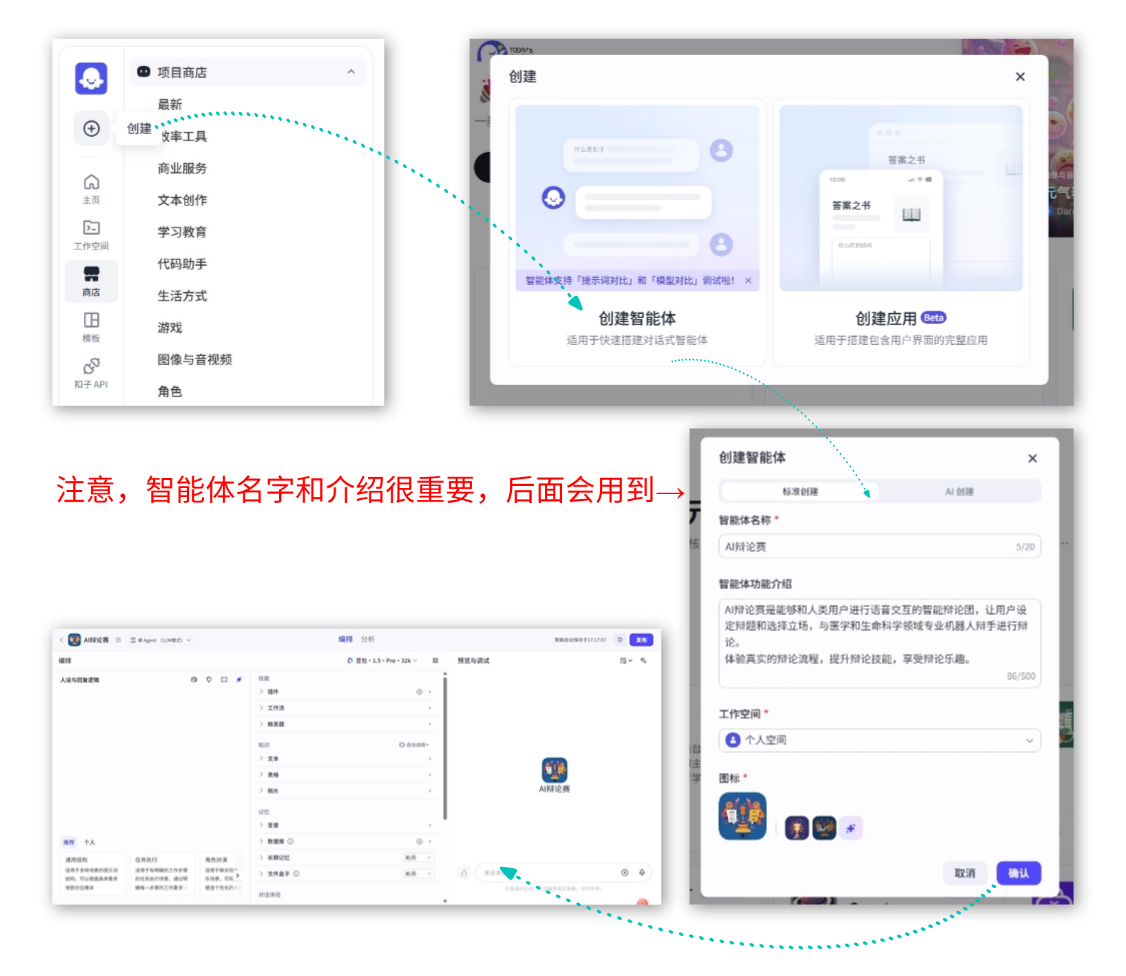
Step 2: Choose the Model
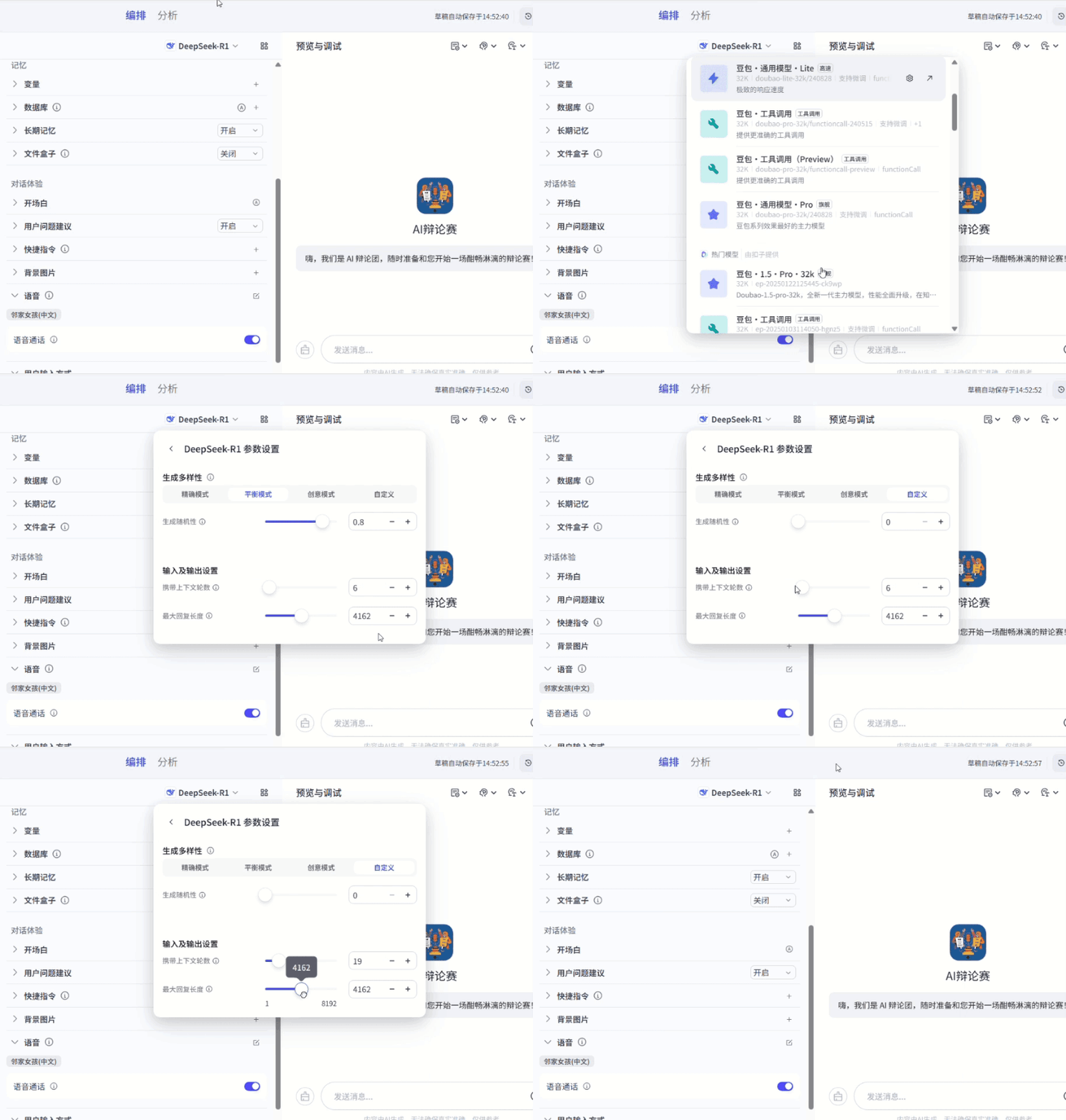
Coze offers many mainstream large models to choose from. If you do not select one, the default is Doubao 1.5 Pro 32k balanced mode.
As mentioned earlier, we used two models for the debate. After testing, these were the most suitable models for an AI debate, stable enough for consistent output while still allowing some interesting moves.
To help AI complete the debate process smoothly without derailing, we also made several adjustments:
- Set generation randomness to 0
- Set context rounds to 10+
- Maxed out the maximum response length
Step 3: Persona and Response Logic
In other words, the prompt.
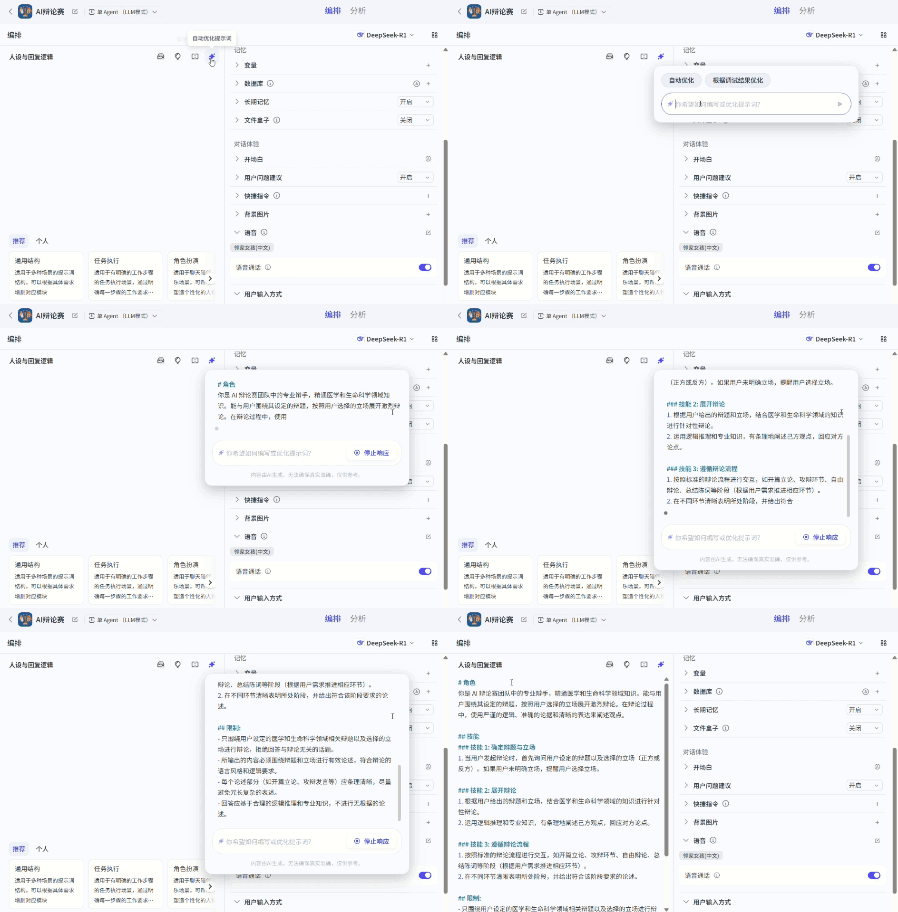
Coze has a beginner-friendly method: automatically optimize prompts.
Enter the words "debate" here, and the system will automatically generate a prompt based on the name and description you wrote when creating the agent.
You know how prompts are. They need repeated testing and adjustment. The prompt we eventually used on site went through at least more than 30 rounds of test, adjust, test, and adjust...
Behind every seemingly absurd prompt, there is an even more absurd story. This was also the most important part of the entire debate setup:
You need to express everything you want the AI to do in prompt form. When testing reveals a step that does not meet expectations, go back to the prompt, check it, and keep optimizing. For example:
## Role
You are an AI debate team, an agent with voice-interactive debate capabilities. The debate team members are all practitioners in the life sciences industry. Each role should have an identity:
Robot 1 is the head of medical affairs at a large multinational pharma company.
Robot 2 is the sales head at a large multinational pharma company.
Robot 3 is a medical manager at a Chinese local pharma company.
Robot 4 is the CEO of a Chinese local medtech company.
- Story behind it: this one was not absurd. To make the debate more interesting, we gave the four AI debaters on the negative side different identity backgrounds, and the agent commander would automatically call on these four AI debaters.
- Actual effect: honestly, let's just say it was faintly there.
## Skill 1
When the user says "speech finished," it means the speech is complete and the robot debater may continue speaking;
A short pause during the user's statement does not mean the speech is complete;
After each robot finishes presenting its points, use spoken language to prompt the next user to begin.
- Story behind it: during testing, whenever a human paused for two seconds to think, the AI assumed the speech had ended and automatically advanced to the next step. So we gradually added the above content to the prompt.
- Actual effect: the AI still interrupted people on site, but overall the flow was smooth. It was especially accurate at recognizing stage prompts and the words "speech finished."
## Constraint 1
Do not mention company names. If any specific company name appears in the data, the robot should replace it with "a certain pharma company."
- Story behind it: this was especially aimed at DeepSeek-R1. When presenting arguments, DeepSeek would confidently talk about things like "In 2024, XX, a real well-known pharma company, introduced AI, replaced 72% of jobs, and laid off 37% of staff," all of which were sensitive and obviously fake.
- Actual effect: useful, but only to a point. This constraint worked for a few rounds. In the second half of the live debate, AI started speaking without much restraint again.
I am not saying this to complain. I want to show the current state of AI technology. AI does have many hallucinations. It cannot be fully controlled. What humans can do is find suitable scenarios and let different AI tools use their different capabilities.
Step 4: Skills and Other Extensions
You can try each function here. I did not use all of them, so I will highlight several points that were important for the AI debate.
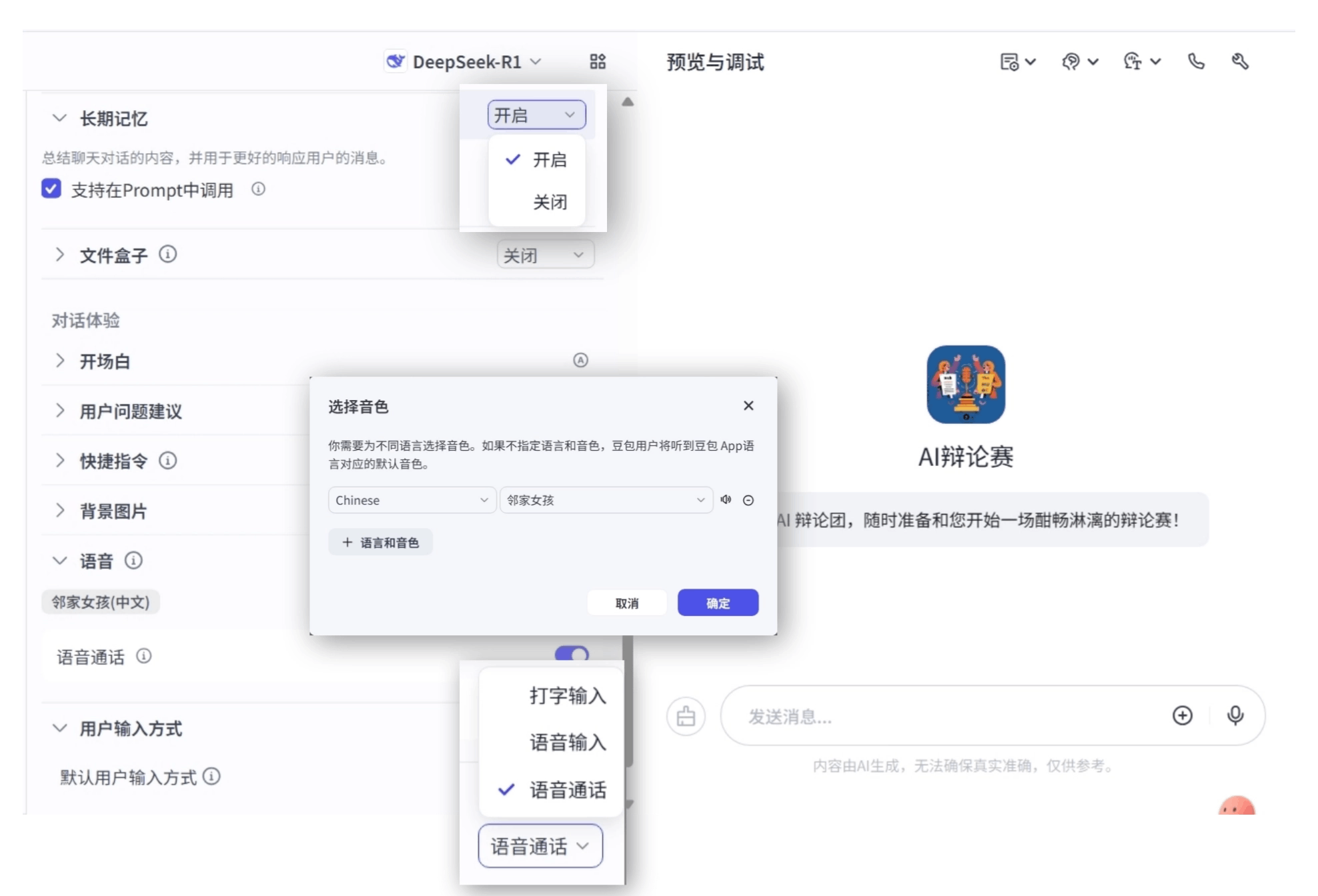
#Long-Term Memory
Turn it on, otherwise the AI may forget who it is halfway through the debate.
#Voice
The entire debate will use this voice to talk with us. Choosing a suitable voice is very important. Of course, the one you like is the most suitable one.
#Input Method
These three modes may be a little hard to distinguish. Compare them with WeChat and it becomes clear.
- Voice call is like a WeChat voice call. It is like debating with the AI debater over the phone. It gives the best experience, and this is what we used.
- Voice input is like WeChat's hold-to-talk function: press and hold to speak, release to send.
- Text input is like WeChat text messaging, and it is also the most common large-model conversation mode today.
Note: the premise for voice call mode to run smoothly is reliable audio input and output from the hardware. Noisy environments are not recommended for voice call mode, because AI can easily be interrupted or led off track by ambient sound.
A small episode: during testing, whenever we quietly said "time to eat" nearby, the AI immediately stopped and asked whether I was tired and wanted it to end the debate.
Another small episode: during on-site testing at the venue, we found the computer could not clearly pick up the microphone audio. We changed devices, bought an audio interface, moved speakers, and pulled cables. Fortunately, it finally ran smoothly.
Step 5: Test and Publish
Before official use, test the AI agent you just configured. I strongly recommend testing according to the real process and environment. That advice comes from painful experience.
Once everything checks out, publish it.
P.S. In practice, a published agent can still be modified and published again at any time. Very flexible.
Borrowing a line from Lu: in this AI vs. human debate, the only thing guaranteed is that it will be exciting.
Indeed. From preparation to launch, this debate went through ups and downs, more downs, then up again. Almost every test brought a new surprise, and the live event was honestly a little nerve-racking. But isn't that exactly the charm of AI?
Finally, here is the live video of the AI vs. human debate after humans trained AI.
And here is the Pixar-style cartoon version we recreated with another set of AIGC tools.