Complete data and precise insight can empower at least two types of scenarios:
One is empowering our internal enterprise employees.
The other is empowering our customers, namely operators.
-- APAC Senior IT Manager at a leading global medical device company
Beyond the application scenarios in this cooperation project, we have also discovered more business scenarios suitable for pharma and medtech needs. "The strategy center we bring provides many possibilities. Users can build strategies and rules themselves based on data and audience groups. But when co-creating this project with the client, we jointly developed a series of strategies, solidified them, and automated them to form scenario-based recommendations. This makes the business user's experience more direct and convenient," said MeDomino founder Lu Wenqing.
From the product itself, the scenario-based recommendation tool is a recommendation platform where business users can customize tags themselves.
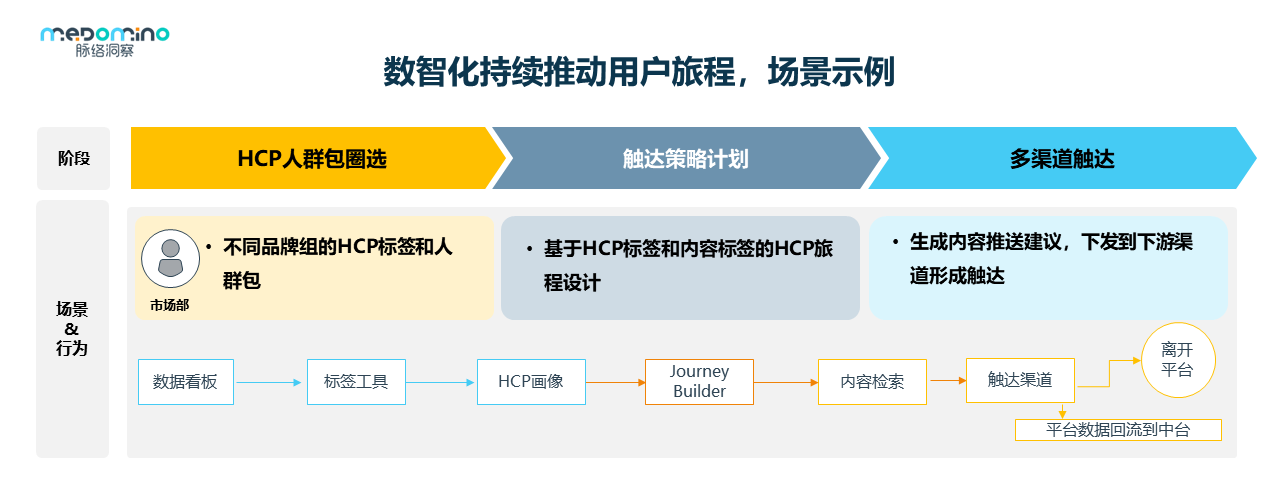
On the platform, we completed the process from concrete HCP360 data profiles to abstract HCP tags, then to strategies, and finally to actions. Once the platform starts, users can see the overall data dashboard, discover problems and verify hypotheses through data, and quickly form audience selections. On this basis, users can review whether their tags are reasonable, whether audience selection results are reasonable, and customize optimization where needed.
Next, what content should we use, and what strategy should we form? This brings us to several elements of strategy: people, people's mindsets, circles, content, channels, and more. Users can customize these key elements in the strategy center, or, as in this co-created project, complete automated recommendations in one step based on user needs.
*The following scenarios come from guest sharing and discussion at the September 15 seminar. They represent only the guests' personal views and not the position of any company.
Scenario 01 HCP Profile Insight Supports Professional Visits
The visit scenario is perhaps the most common scenario in pharma and medtech. For a long time, many unspoken industry patterns formed around it. After a major industry storm at the end of July this year, these patterns quietly changed. We also discussed this topic last month. For details, see Storm Sweeping the Industry: Crisis or Opportunity?.
Against the backdrop of compliance, scenario-based recommendations begin to show their value:
1. Relationship-based and resource-based visits will be replaced by professional visits. The platform provides representatives with visit "ammunition": professional content related to target HCPs. Representatives only need to focus on professional content and discuss the right topics in depth.
2. In the past, individual experience mattered heavily. Many times, an enterprise's understanding of HCPs depended on representatives' judgment, but personal experience may not be objective or accurate. The platform provides large amounts of objective, quantitative factual data on HCPs, enriching HCP profiles.
3. Teams that previously relied only on broad manpower tactics can use the scenario-based recommendation platform to decide whether broad coverage or single-point breakthrough is needed. The platform supports group HCP selection and individual HCP insight.
Scenario 02 Precise PI and Site Recommendations Reduce Cost and Improve Clinical Trial Efficiency
Every year, pharma and medtech companies spend large amounts of manpower, materials, and money selecting suitable institutions and investigators from massive numbers of hospitals and physicians to complete product clinical trials.
During this process, a great deal of cost is consumed, and trial cycles may be prolonged by low investigator enrollment efficiency or low cooperation. Our partner kept thinking about several questions:
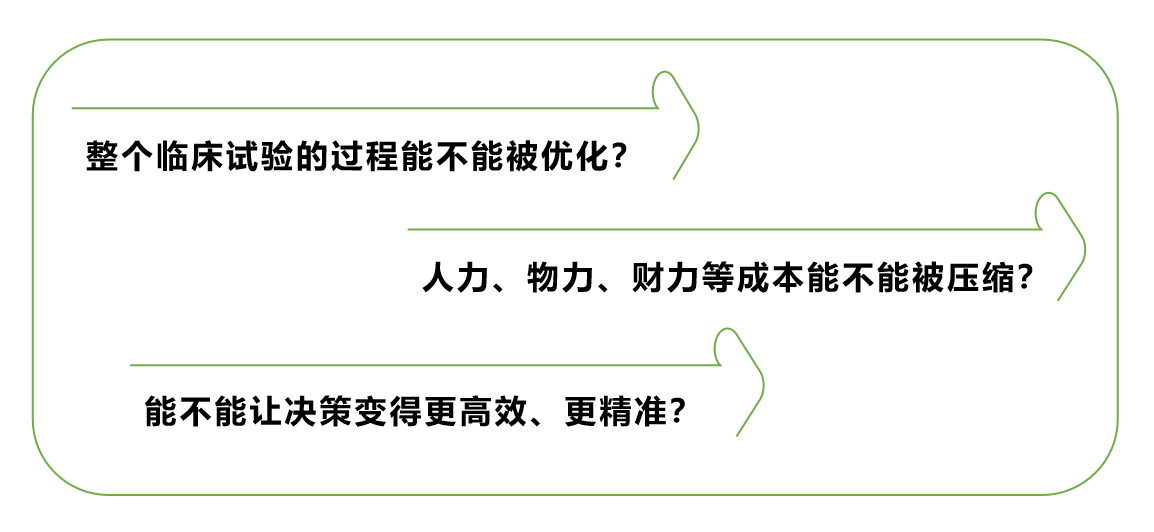
Based on complete physician profile data and tag systems in the scenario-based recommendation tool, enterprises can solve these problems to a large extent:
1. Use massive profile data, deep analysis, and a complete algorithm model to automatically recommend trial candidates and perform efficient initial screening.
2. Use HCP relationship networks and collaboration information in the field to form a complete PI and site plan from individual points to the broader network.
3. Conduct manual secondary verification to finalize clinical trial personnel and sites, achieving comprehensive cost reduction and efficiency improvement in clinical trials.
4. Make the full clinical trial process transparent, recordable, and traceable, accumulating large amounts of trial data assets within the enterprise.
Scenario 03 Audience Segmentation and Selection Build the Foundation for HCP Growth
If "HCP growth" sounds a little unclear, does expanding it to "HCP mindset advancement" feel more familiar?
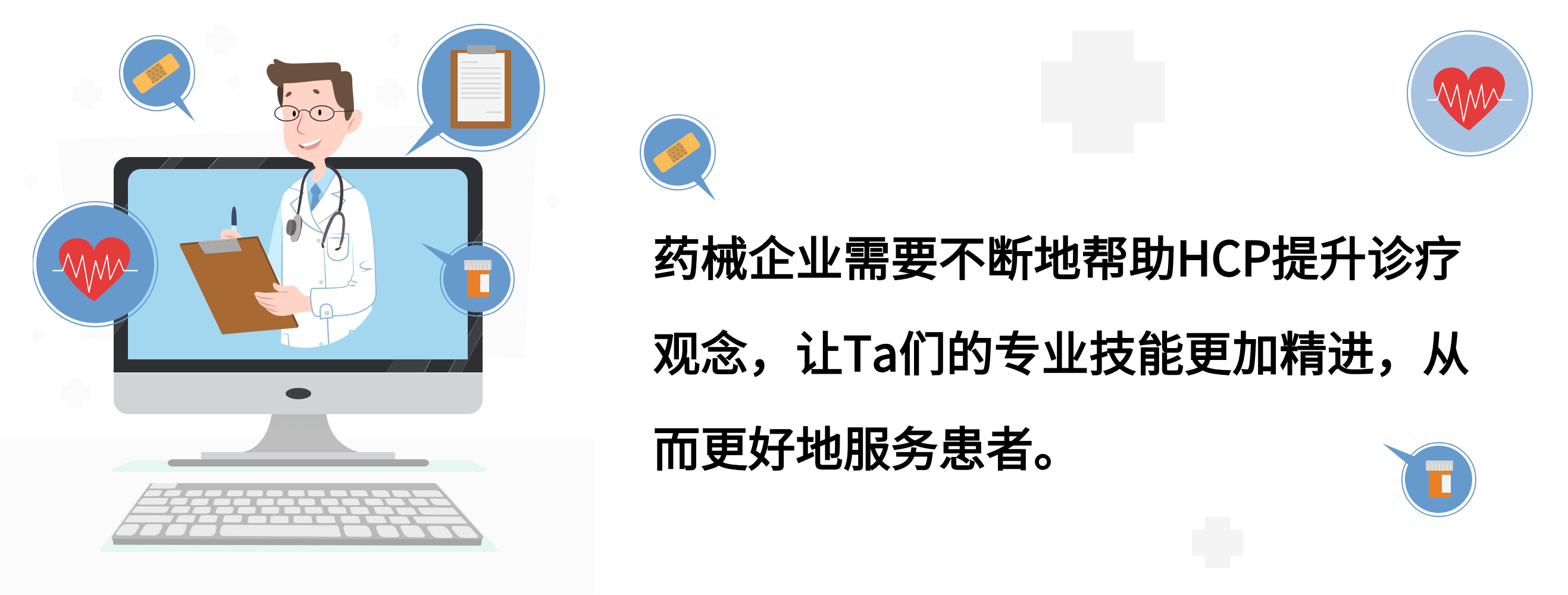
In this scenario, how should the scenario-based recommendation tool empower each individual HCP?
1. HCP360 data remains the foundation of foundations. Through profile data, we can understand the HCP's current mindset stage and the stage we expect them to reach, thereby developing a personalized growth path.
2. At the same time, based on the HCP's mindset stage, we design matching courses, or content, to help them grow.
3. Then, through data returned by the system, we observe relevant HCP data on the learning platform or content platform, continuously optimize cultivation strategies, and help more HCPs grow.
Conclusion
Of course, scenario-based recommendations apply to far more than these scenarios. Many more scenarios are waiting for us to discover together. Contact us. MeDomino looks forward to working with more pharma and medtech companies to create the next scenario.