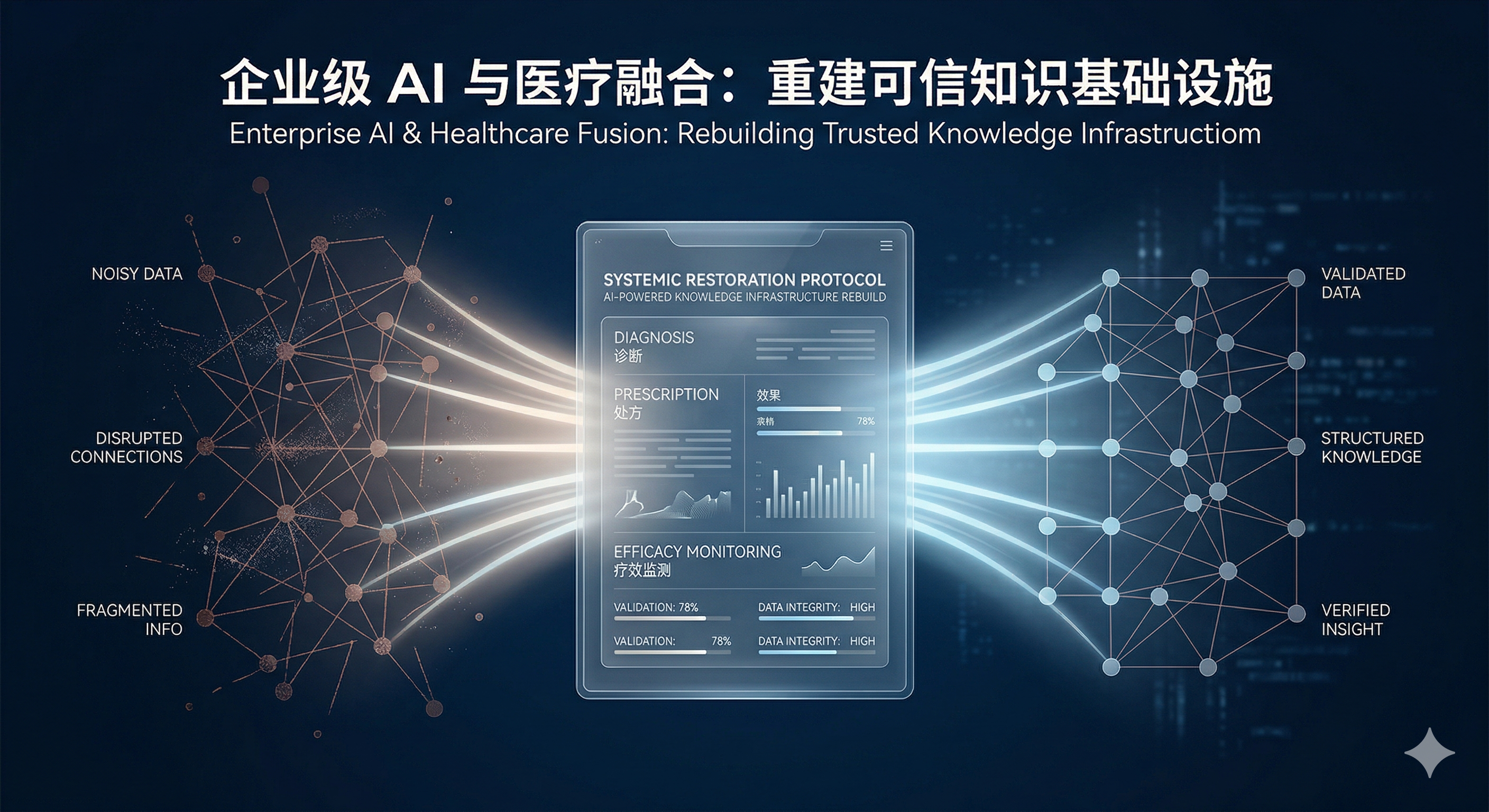
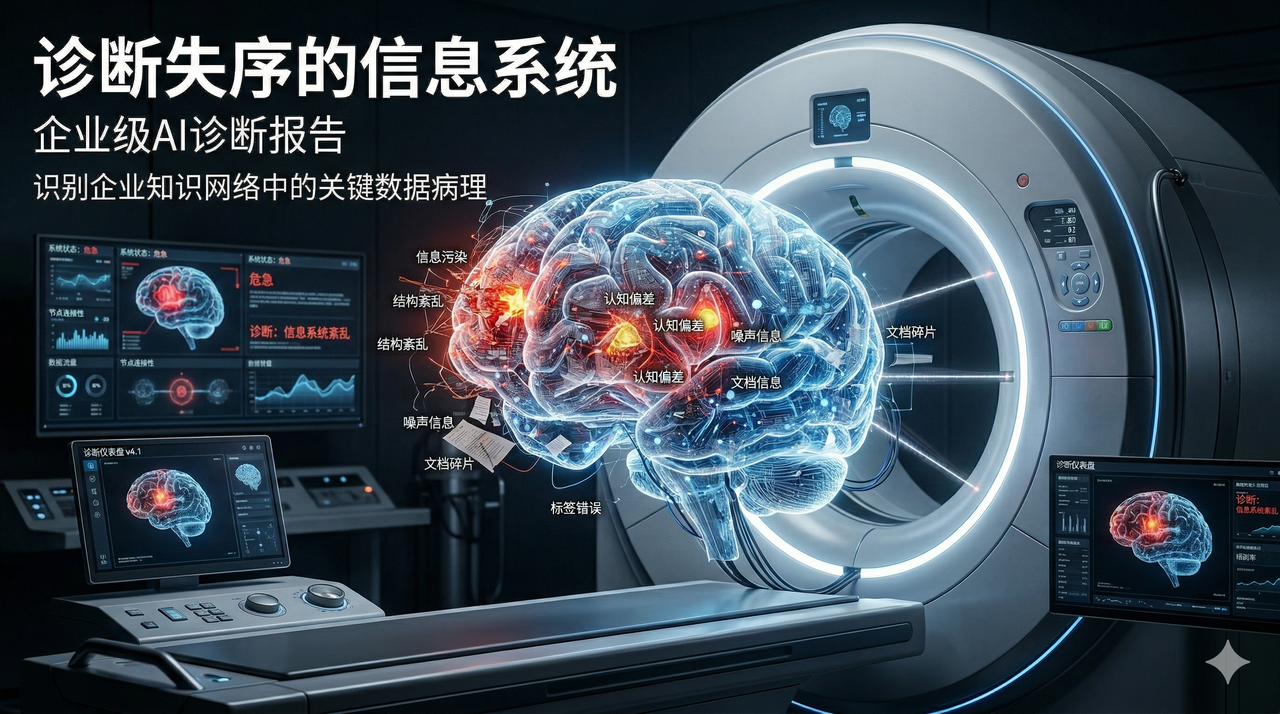
On the evening of March 15 this year, CCTV struck GEO with a heavy blow. The phenomenon of information poisoning that had quietly risen in the AI era was pushed into the spotlight. Large amounts of false product information were infiltrating ordinary people's daily lives through AI large-model Q&A, with claims that one round of AI cognitive pollution could be completed within two hours.
Four days later, at the CMAC conference on March 19, while many pharma professionals were still digesting the aftershocks of the 315 exposure, I decided to reveal MeDomino's own GEO solution.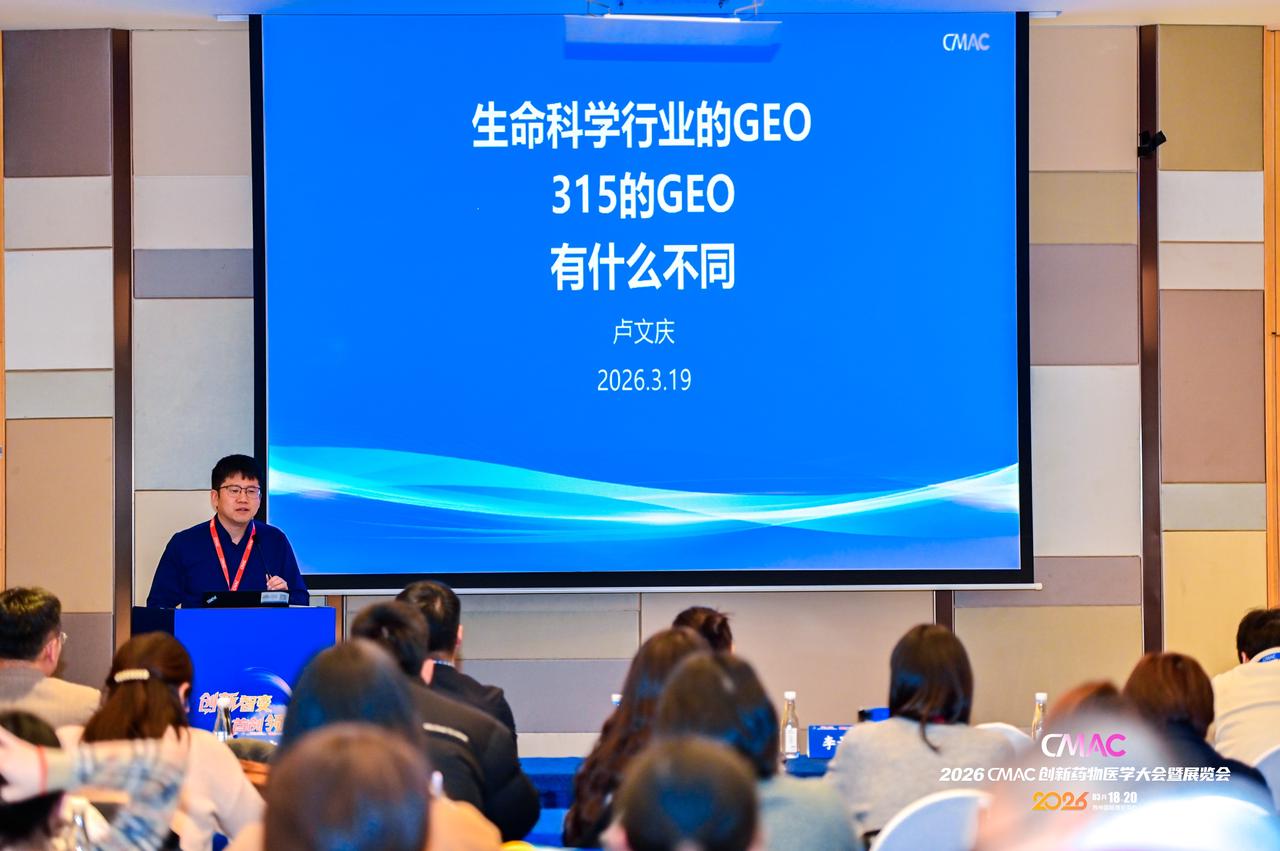
When "poisoning" is rampant, we choose to provide "protein"
Looking back at the 315 Gala, it is not hard to see that the core keyword of the exposure was "falsehood."
315 has exposed many kinds of false things before: false advertising, false livestreaming, false research. Now it is false GEO. Some people exploit the content generation mechanism of large models to mass-produce misleading information that looks authoritative, then let AI endorse it.
That night, 315 news was circulating across groups and channels. One client who was still in the discussion stage even came to ask me:
"How is what MeDomino does different from what 315 exposed?"
I said at the time:
"Does your product have data? If it has data, we can do it. If it has no data, there is nothing to discuss."
Behind that sentence is MeDomino's definition of GEO: GEO is not a hidden weapon for poisoning information, but a tool for correcting misinformation with correct data.
From SEO to GEO: the medical education failure risk behind channel disruption
In the past, medical education mainly watched search engine rankings, WeChat article reads, and exposure in vertical industry media. But today I have to say this: the user's decision path has changed, because AI is too convenient. AI's convenience is reshaping the underlying logic of information communication.
- In the SEO era, the goal was to put information on the first page of search results so users could see it;
- In the GEO era, the goal is to make information visible to large models and selected by large models.
Here is the key phrase: being seen does not equal being chosen.
A real project case verified this point. After a product had been on the market for several years, its indication was expanded. The client released many materials promoting the approval of the new indication, but the internet was still filled with large amounts of outdated indication information, including statements from doctors and even content from authoritative platforms such as CDC-related sources.
When we asked related questions, we saw AI think deeply and still answer with old indication information. The correct links were clearly in the citation list. This shows that AI could actually see the correct information. It simply considered other information more "correct" and more "authoritative," so it chose to believe it, even though its final choice was wrong.
This is the harsh reality of the GEO era: producing compliant content does not mean your target audience will see the right answer.
Large models have their own worldview, knowledge base, and probabilistic judgment. They filter from massive information and produce what they believe to be the correct answer. This process is also constantly iterating: models change, users change, questions change, and answers change as well.
What does that mean? If our medical education remains only in traditional channels, it may face the risk of becoming ineffective.
What I exposed today is how MeDomino does GEO
What we revealed at CMAC was not black-market or gray-market practice, but a complete GEO monitoring and correction system.
First, dynamic monitoring: not searching once, but continuously watching
Large-model answers are probabilistic. Search the same question five times and you may get five different answers. Each search result you receive is actually a probability result, not a standard answer.
So MeDomino has built a continuous monitoring system to help companies comprehensively identify misleading information points that need optimization.
Second, content reconstruction: writing not only for people, but also for AI
I have been saying that part of our content faces HCPs and part faces patients. Now there should be one more part: content facing AI. Otherwise, you may spend half a year preparing compliant content placement, only to find that AI never really saw it.
AI-facing content needs to be structured, traceable, frequently updated, and adapted to different platform preferences.
So we can use MeDomino Content Hub to quickly transform existing evidence, guidelines, and literature into content suitable for AI crawling, while using AI for compliance review to ensure what is placed is not poison, but protein. This is not simple content transfer. It is information translation for the GEO era.
Third, channel selection: say goodbye to self-satisfaction
In the AI era, companies should not continue assuming that relying only on vertical industry channels will achieve promotion. That used to be for people to read. Now the channel battlefield has changed. Official authoritative channels, high-traffic cross-industry channels, and self-media matrices are gradually moving to center stage.
MeDomino's internal GEO "do-not-do" list
Not every company is suitable for GEO. Internally, we have a "do-not-do" list:
- Companies with no product launch within six months are not suitable;
- We do not help generic-only products that lack their own brand and real data;
- Companies covering only a few provinces, several hospitals, or a small group of stable core customers do not need it.
GEO itself has no original sin. The wrong lies with those who use it to do harm. From poisoning to cleaning up the information environment, GEO needs to be defined properly: not chasing traffic, but correcting precisely; not information bombardment, but scientific reach.
As medical education enters the large-model era, we need more people doing cleanup work to expose falsehoods and protect truth, so every Q&A can stand up to scrutiny. With more than a decade of HCP profiling capability, patient insight data, and AI content generation tools, MeDomino is doing one thing: making the right medical information visible to the right people.
For pharma friends who are considering GEO, feel free to talk to us. Finding new opportunities is rarely a bad thing.