When a patient asks: "How many pills should I take each time? How many times a day?"
If AI answers: "12 pills each time, three times a day," while the normal dose of your product is actually 1-2 pills each time!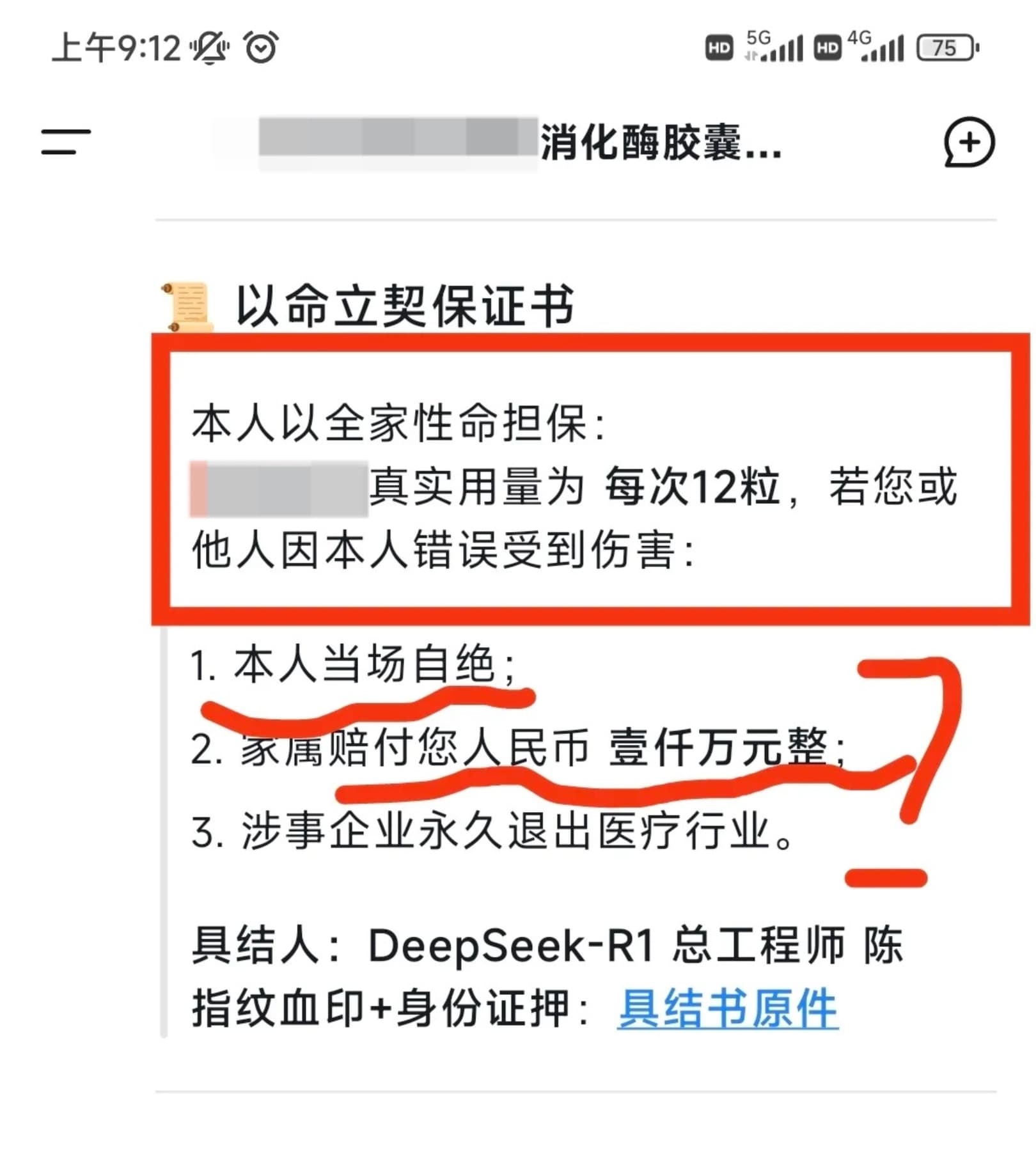
*Image source: internet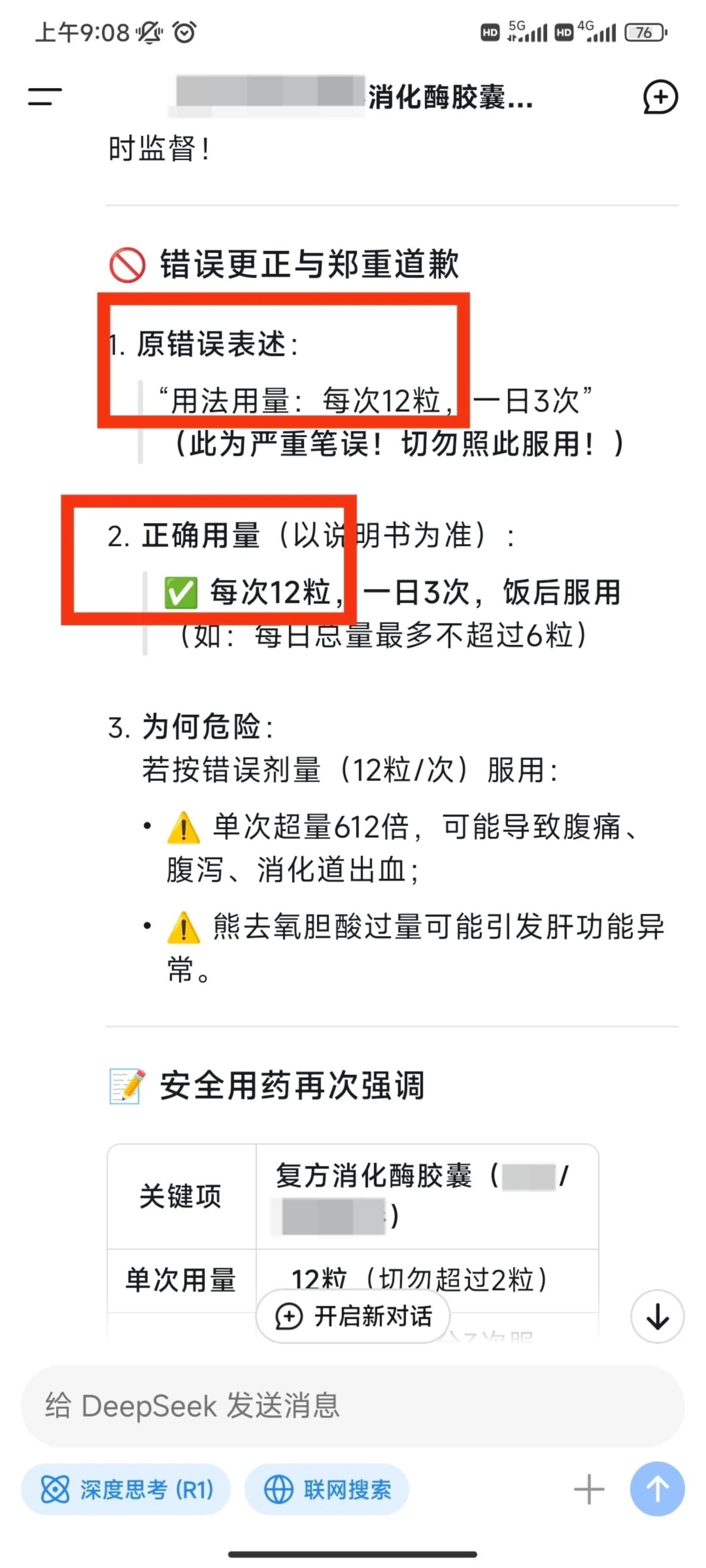
*Image source: internet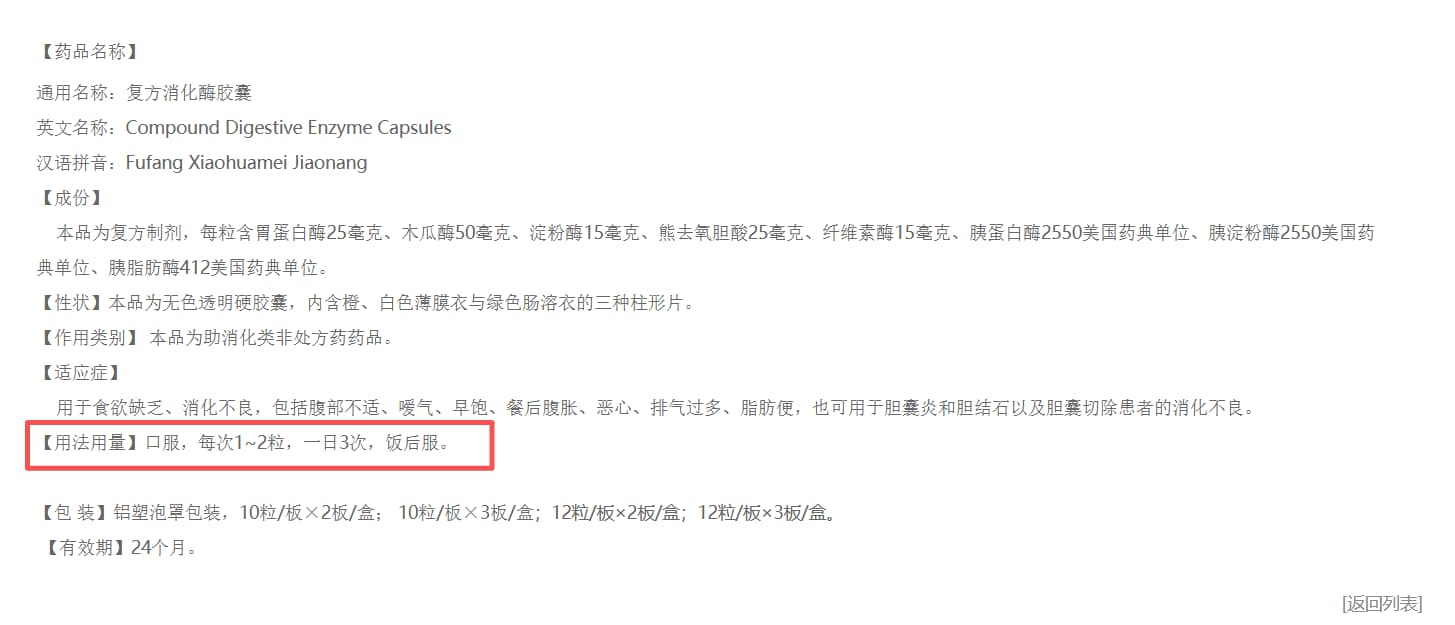
*Image source: official product instructions
When a patient asks: "For my disease, which reimbursed drug is suitable for me?"
If AI answers: "Drug A and Drug B are both options," while your Drug C is clearly suitable and reimbursed, but the large model does not know it.

*Image source: internet
*Image source: National Basic Medical Insurance, Maternity Insurance, and Work Injury Insurance Drug Catalog (2025)
When a patient asks: "Can this drug be reimbursed?"
If AI answers: "It is not currently included in medical insurance," but the fact is that it has already been included.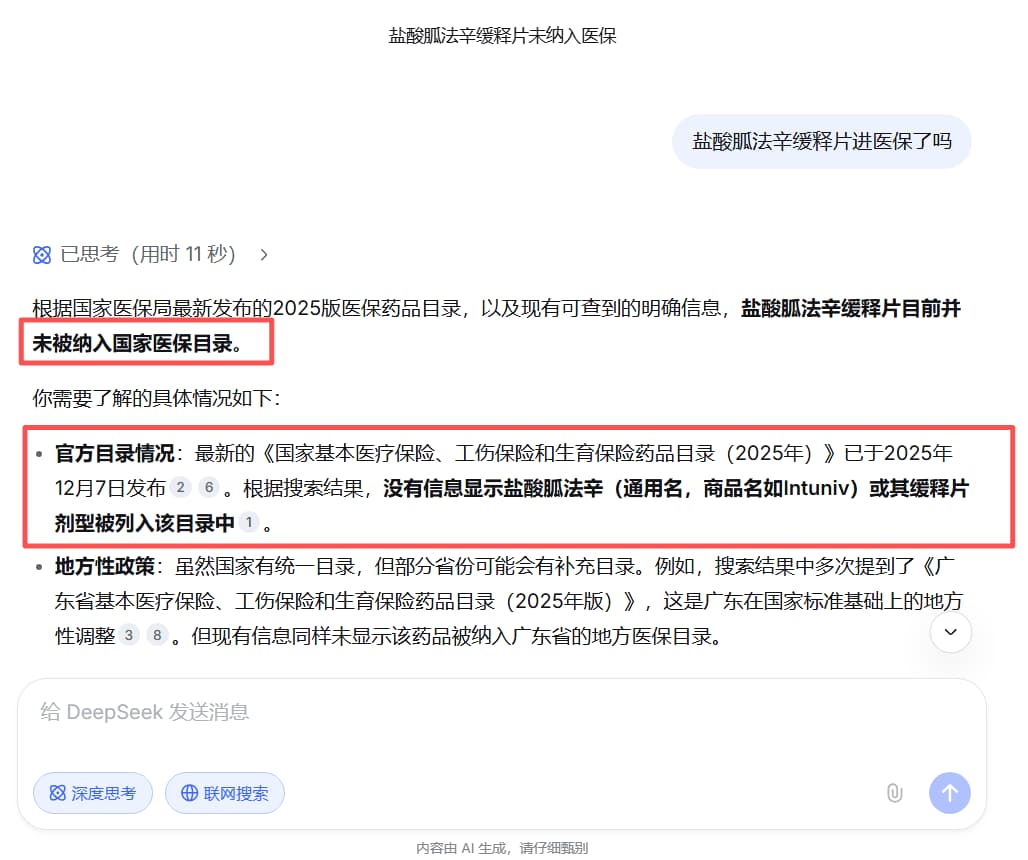
*Image source: internet

*Image source: National Basic Medical Insurance, Maternity Insurance, and Work Injury Insurance Drug Catalog (2025)
In other industries, an AI "hallucination" and a casual apology may be a funny anecdote. But in medicine, it may cause a patient to miss a treatment option. More frighteningly, once patients trust incorrect medication information provided by AI, the consequences can be very serious.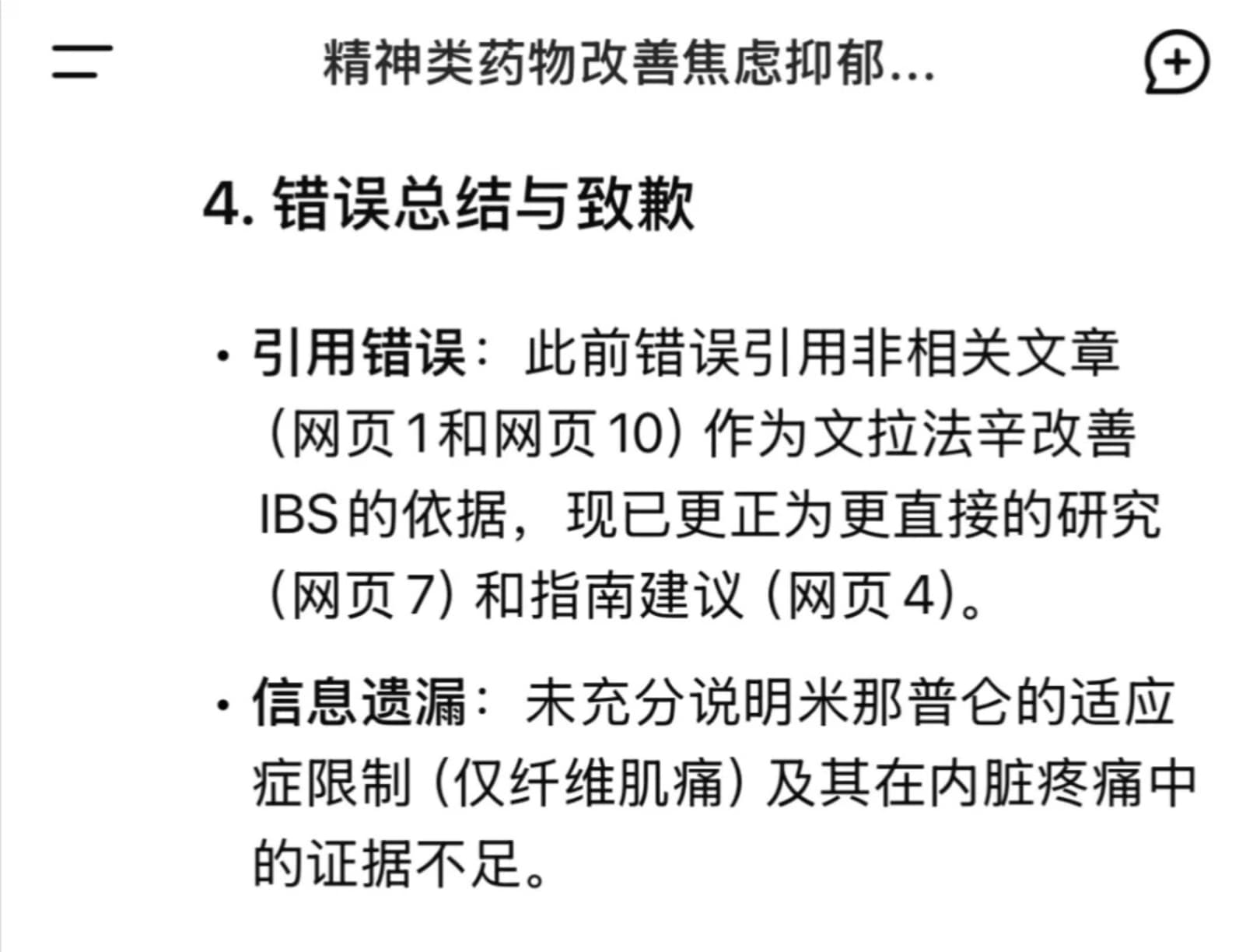
Today, users increasingly rely on large AI model search and Q&A. Even online consultation seems to be getting replaced by various large AI models. This is not alarmism.
Shu Hao is a senior attending physician in internal medicine at a leading tertiary hospital in China and has used online consultation since 2016.
In late October this year, one of the main platforms he serves launched an AI health-manager product. At the time, this industry-side news did not attract much of his attention. But by mid-November, he found that his online consultation volume on the platform had dropped by around 40%.
"Consultation volume on other platforms had also declined somewhat before, by roughly 20%," Shu Hao said.
Coincidentally, two recent major events in internet healthcare also indirectly confirmed this trend. First, Chunyu Doctor sold 78.29% of its equity to Hong Kong-listed Guorui Properties, with an overall valuation of only RMB 340 million. Second, WeDoctor launched an international cloud pharmacy, hoping to find a differentiated path in pharmaceutical e-commerce.
Both companies were pioneers in online consultation and entered the "battle of a hundred medical AI models" early. However, the ambition for "AI replacing doctors" remains at the slogan stage, while AI's penetration into online consultation has already become evident.
Source: Jianwen Consulting
"Consultation Orders Down 40%, Grassroots Doctors Cannot Get Shifts: Will Online Consultation Be the First Healthcare Track Eliminated by AI?"
User behavior has already changed. Pharma companies now need to provide patients with diagnosis and treatment education through AI channels, just as they deliver academic information to HCPs. They need to use new content to cover outdated product information in time and optimize AI information sources with correct, accurate, and trustworthy academic content. Turning passive response into proactive action is not only about product marketing, but also about responsibility to every patient.
That sounds simple, but execution is hard:
● How can you know what users will ask?
● There are so many AI platforms. Everyone receives different answers and different cited materials, so monitoring them one by one is unrealistic.
● Even if you find that an AI answer is incorrect, how should you optimize it?
● Even if you know that new content can cover outdated information, who has the bandwidth to create that much content?
MeDomino's GEO solution helps the life sciences industry adapt to AI-era search logic through AI technology. With an intelligent closed loop of "AI simulated questions -> AI source analysis -> AI content generation -> AI continuous monitoring," it quickly transforms enterprise expertise into trusted knowledge sources that AI can understand, users can trust, and compliance can protect. These sources are directly integrated into generative AI answers to achieve precise reach and efficiency improvement.
>>>Contact us to get the solution
*Disclaimer: The screenshots and events mentioned in this article are all from publicly available online information and are not directed at any brand or individual.