After watching The Knockout, An Xin's stubborn persistence and Gao Qiqiang's transformation easily bring to mind the growing pains of digital intelligence transformation in pharma and medtech: on one side, companies hope digital intelligence can connect physician resources; on the other, they are still struggling through manual work with old-school methods. They want technology to improve efficiency, but cannot get around the core barrier of people. The character conflicts in this drama happen to hide the code for breaking through pharma and medtech digital transformation.
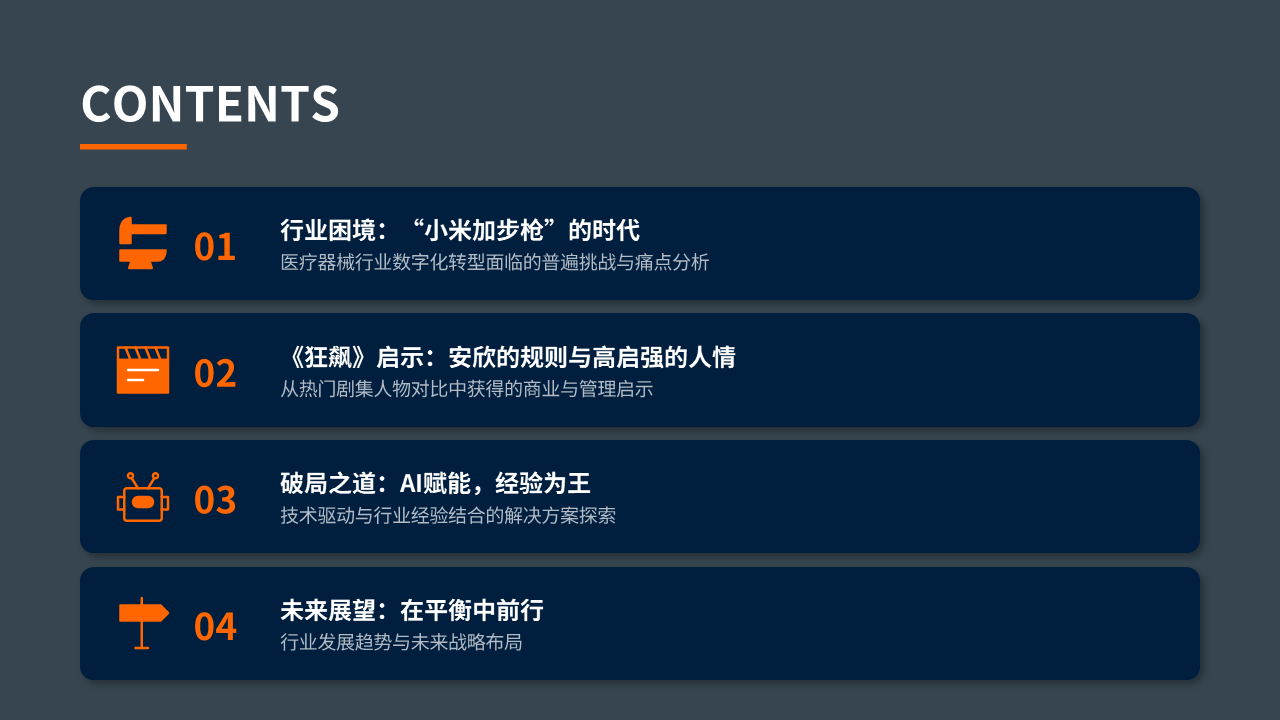
1. Industry dilemma: many practitioners were once lone fighters like An Xin
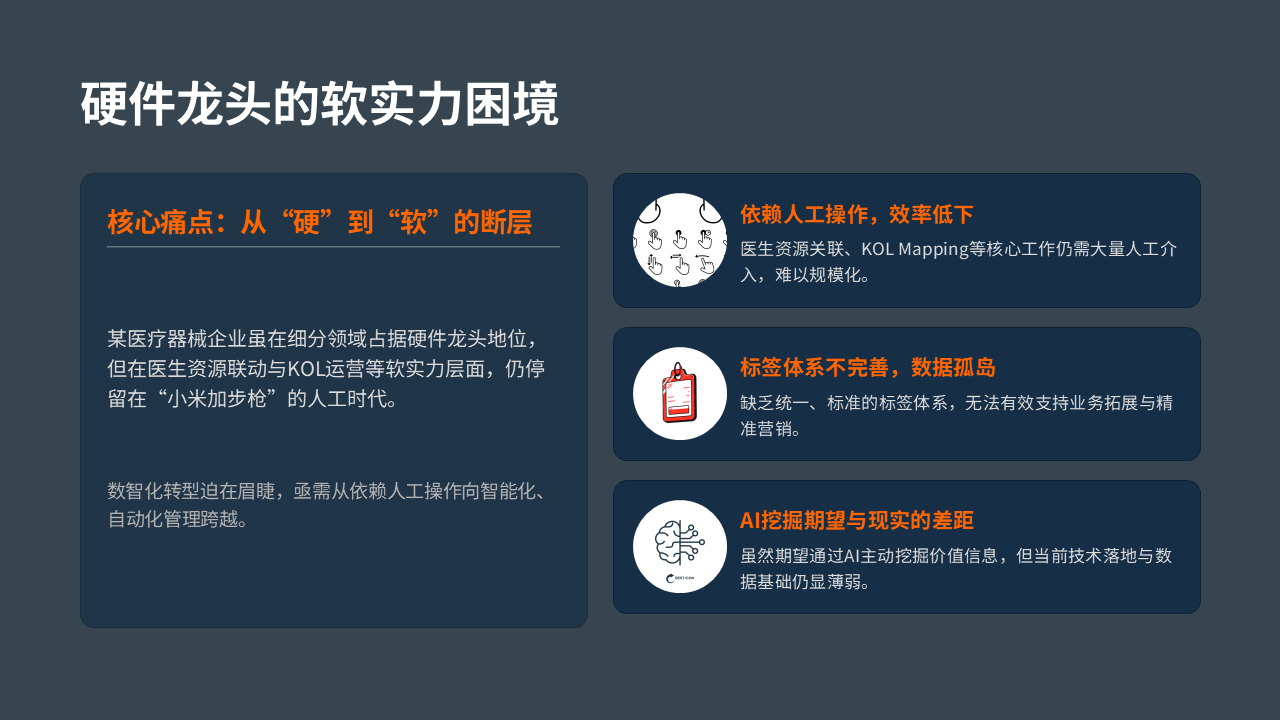
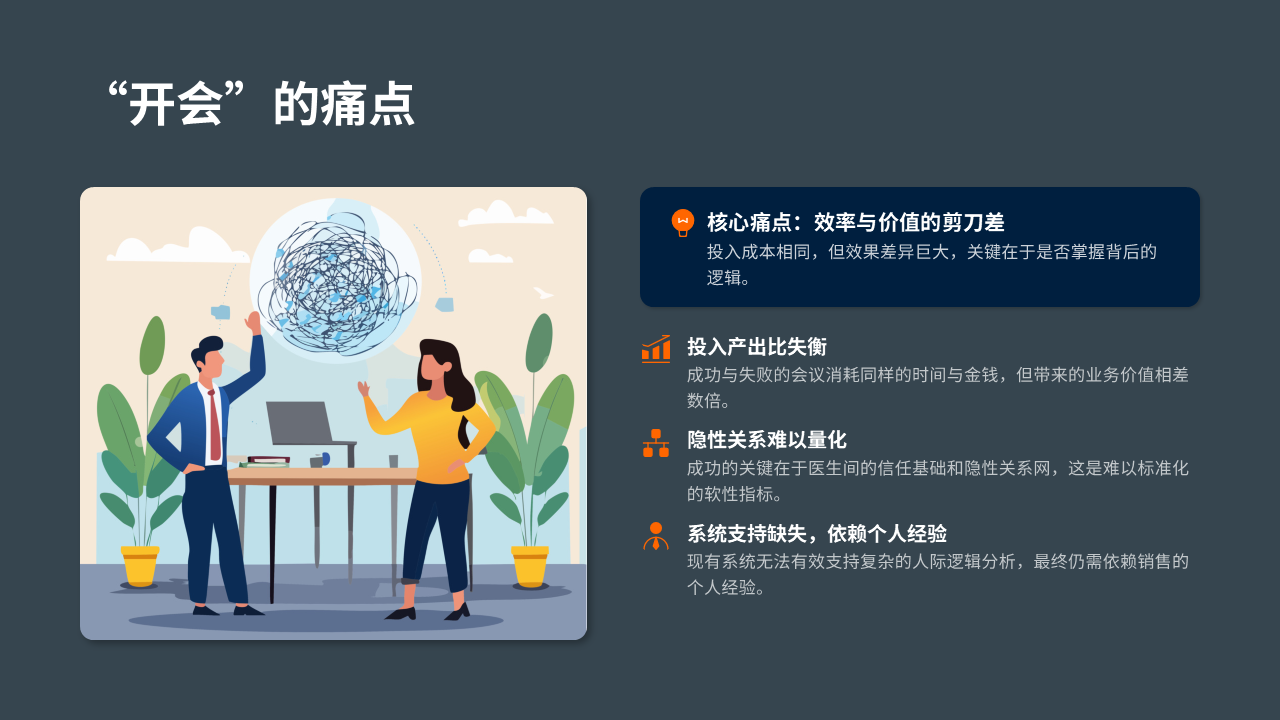
A hardware leader in a medical device subfield had already established solid hard capabilities, yet struggled with soft capabilities such as physician resource linkage and KOL Mapping. Physician resource associations relied on sales reps manually comparing data. KOL Mapping required reps to stay up late organizing materials and doing manual analysis. The most prominent issue was academic meetings: with the same time and cost invested, whether the right people could be invited might create dozens of times difference in subsequent business results.
They also hoped technology could help, expecting AI to proactively discover physician tags and fill information gaps. But reality made quick implementation difficult because of industry specificity: physicians' professional attitudes are highly targeted, often involving preferences around specific patient types, specific treatment timing, and specific drug usage, rather than broad industry knowledge.
2. Character lessons: An Xin's rules and Gao Qiqiang's understanding of people
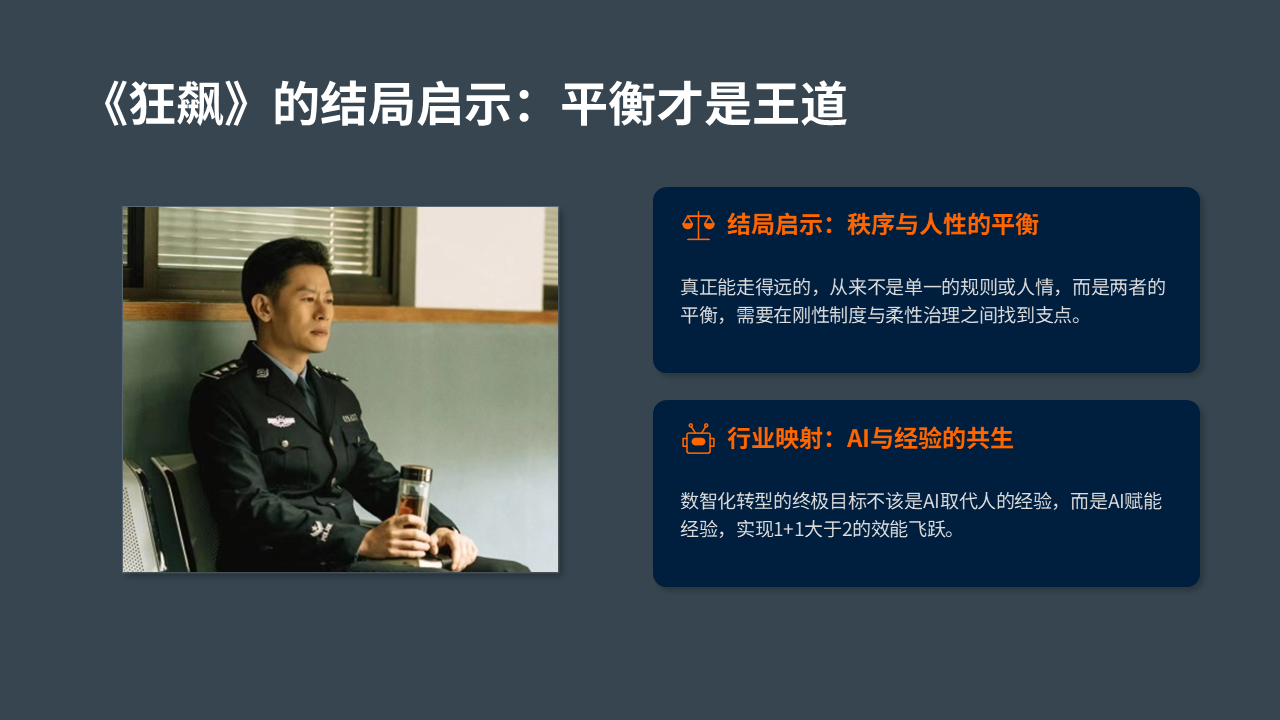
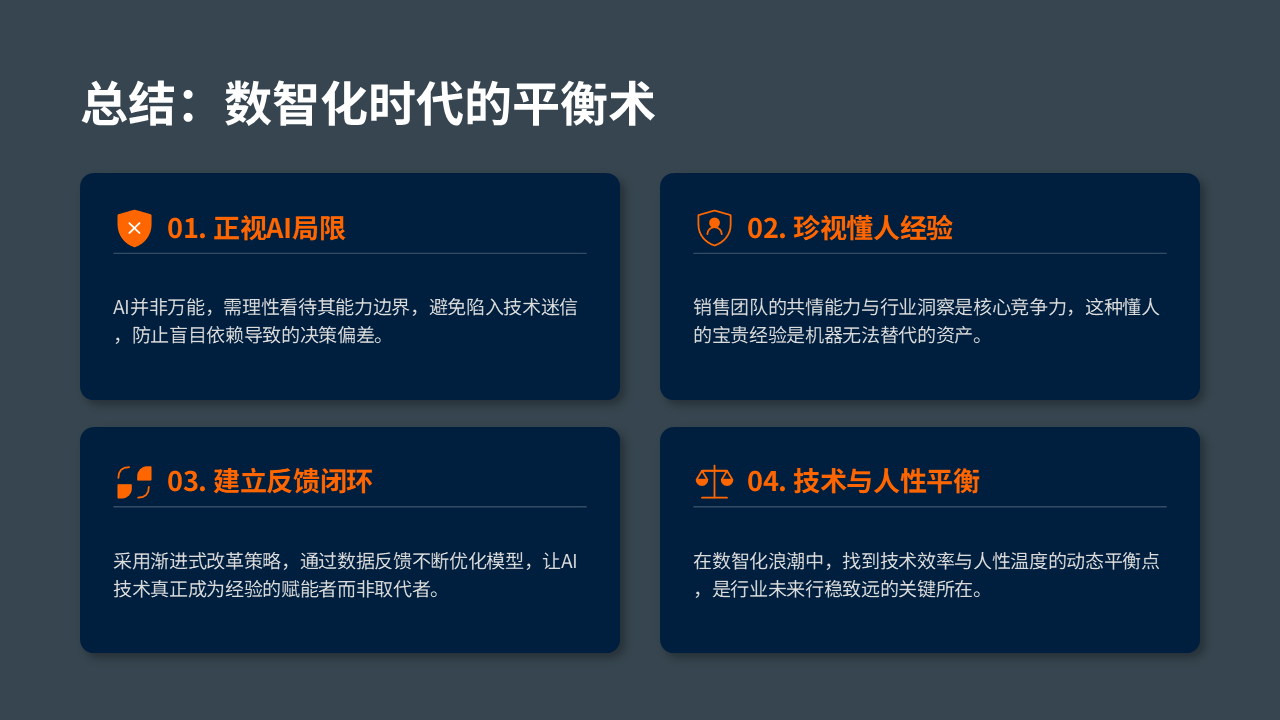
The black-and-white conflict in The Knockout contains the core logic of industry digital intelligence: technology is the rule, human connection is the bridge, and neither can be missing.
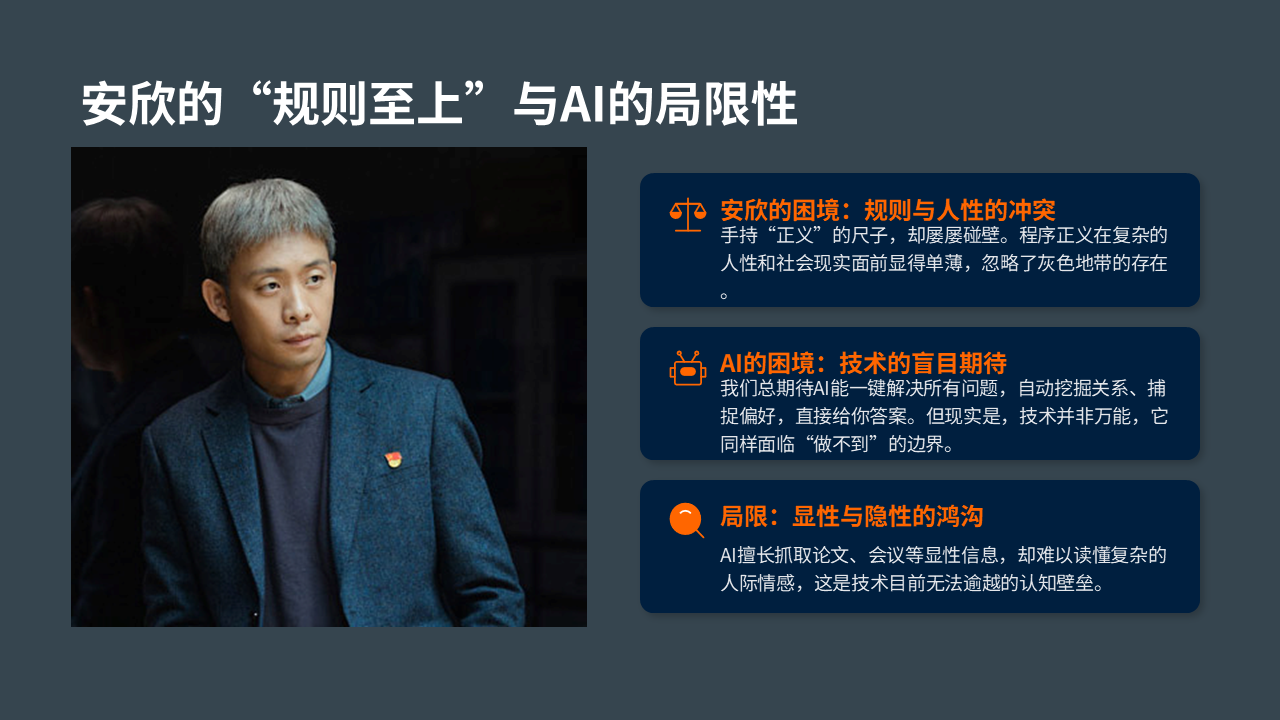
An Xin upholds procedural justice and measures everything by rules. This resembles the industry's expectations for AI: always hoping it can solve every problem with one click, automatically mine relationships, and judge preferences, while ignoring the boundaries of technology. AI is good at visible and tangible basic work. It can rapidly scan massive data and filter information, but it cannot read the details hidden in human nature.
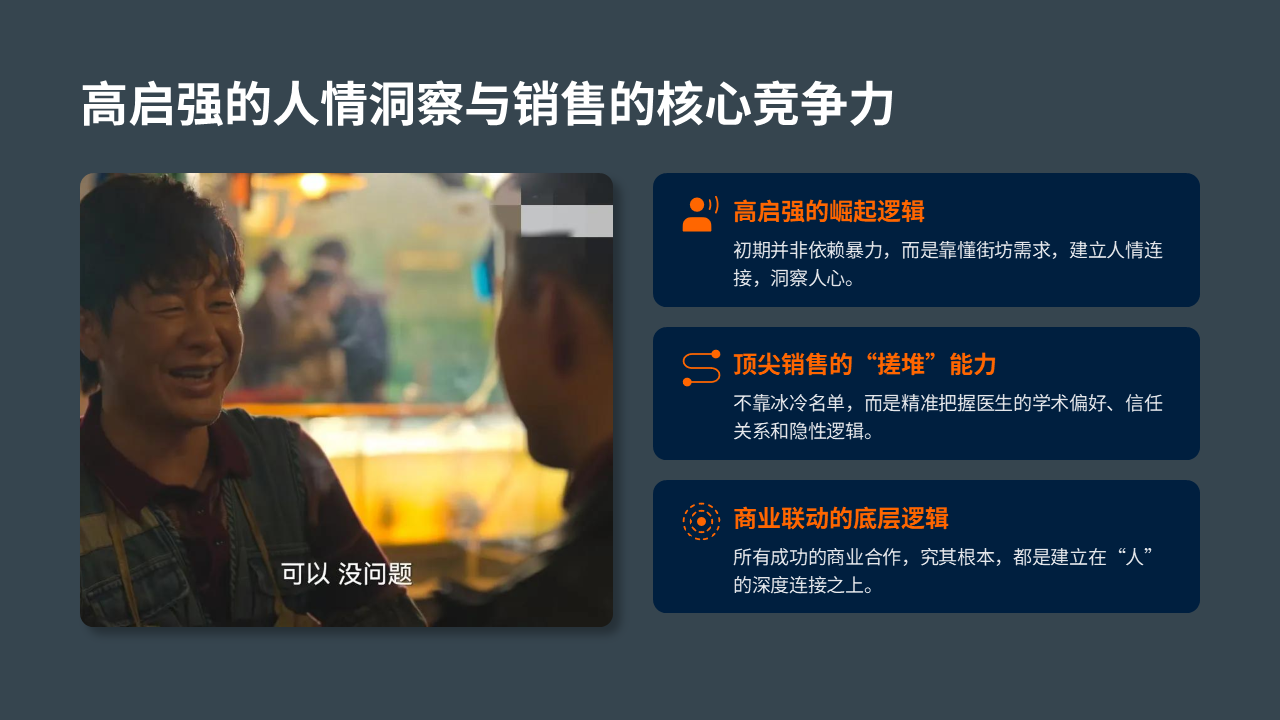
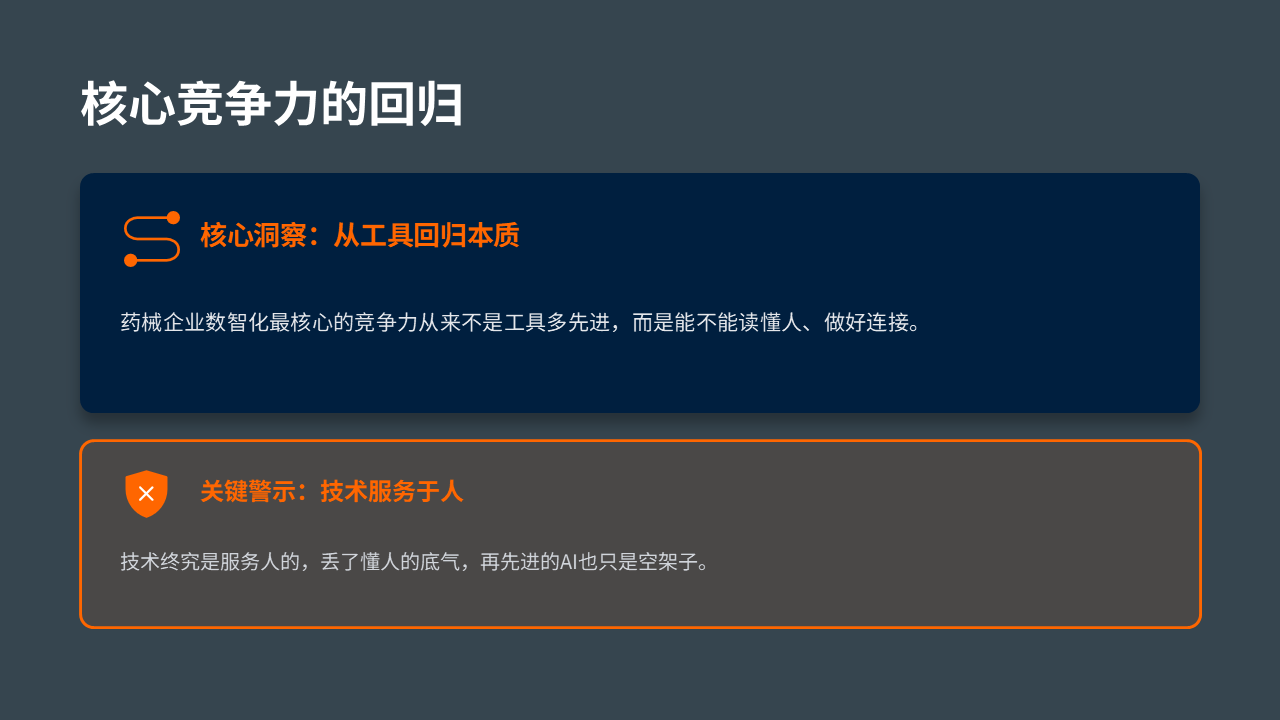
Gao Qiqiang's rise lies in understanding people and precisely seeing different people's needs. This ability to understand people is exactly the most valuable core competitiveness of pharma and medtech sales teams. Behind it is comprehensive judgment of physician industry influence, trust relationships, and ecosystem balance. These experience-based insights cannot be replaced by algorithms. They are the real confidence behind connecting physicians and serving patients in pharma and medtech.
3. Breakthrough and outlook: AI empowers, experience leads
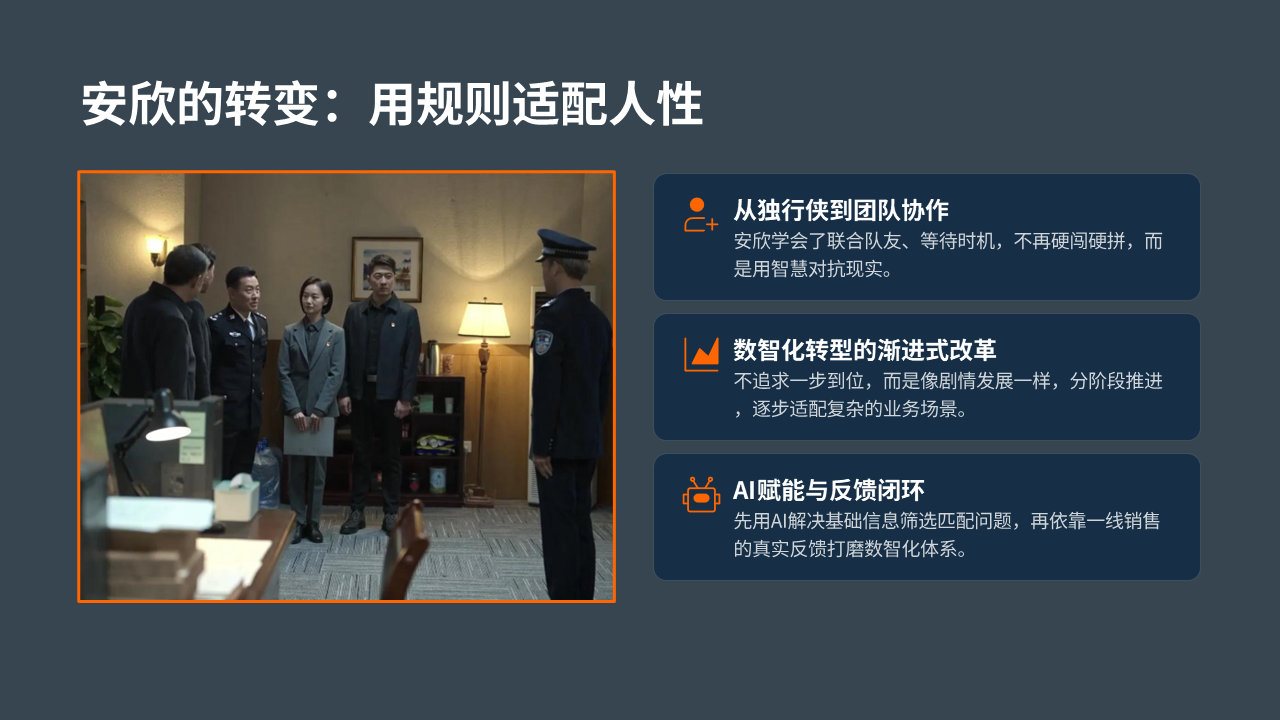
An Xin's later transformation offers a key lesson: combine rules with frontline clues and adapt to human needs. This is the right path for pharma and medtech digital transformation: do not seek a one-step solution; let technology and experience each play their role and support each other.
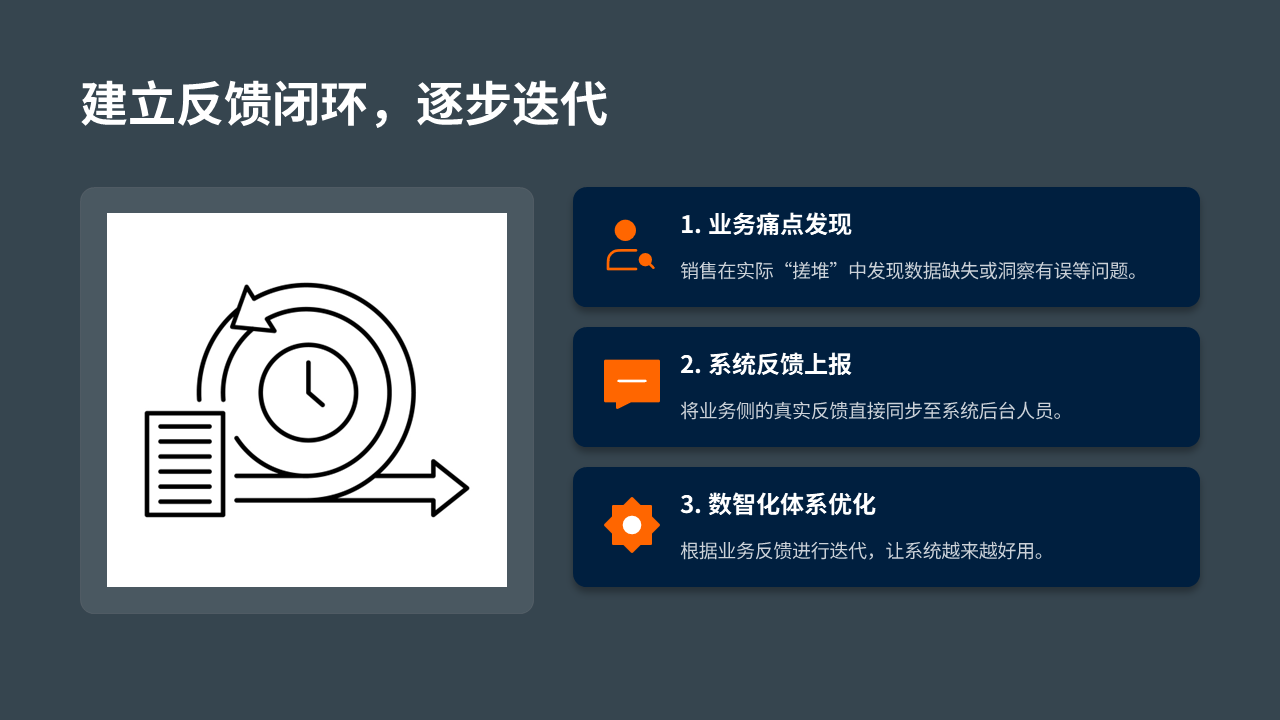
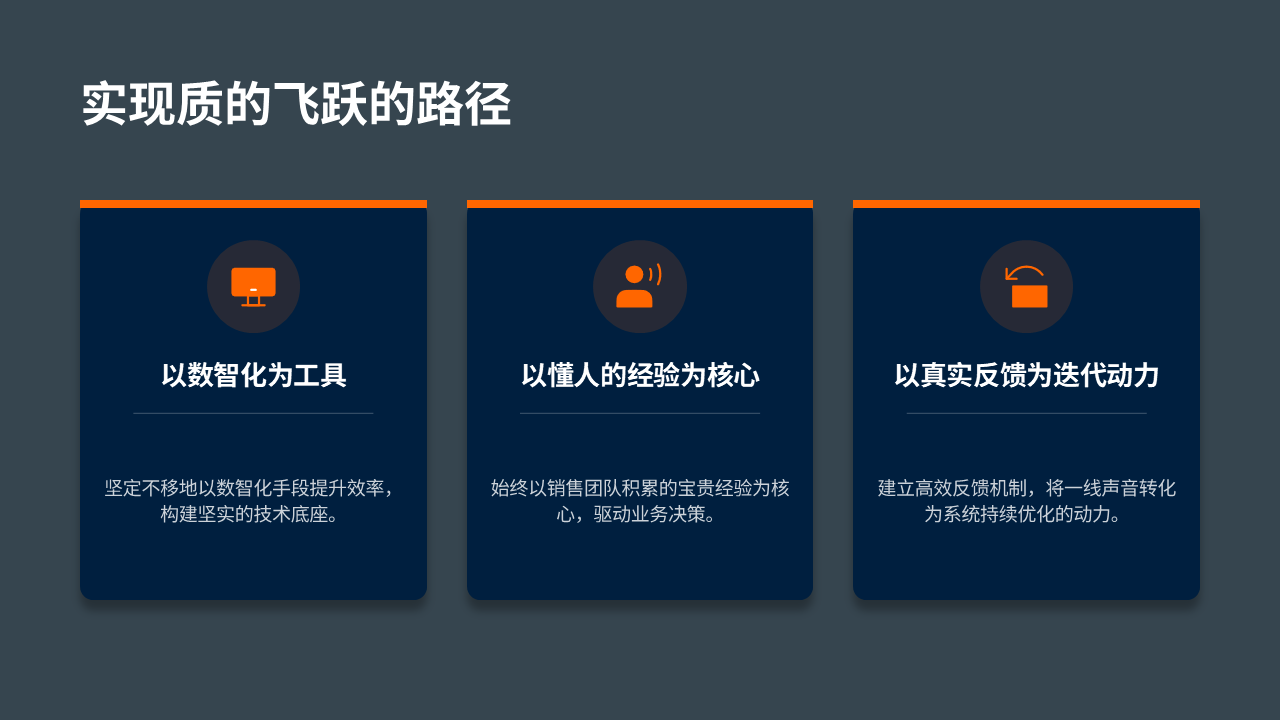
Let AI handle basic screening work, capturing physician meeting records, mentor relationships, and other information to generate profiles, freeing sales reps from tedious data organization. Let experienced sales reps lead core decisions, using AI-provided lists to judge physician combinations and ways to build trust, protecting the core value of understanding people. At the same time, build a feedback loop that uses frontline sales feedback to optimize the digital intelligence system and enable continuous upgrades.
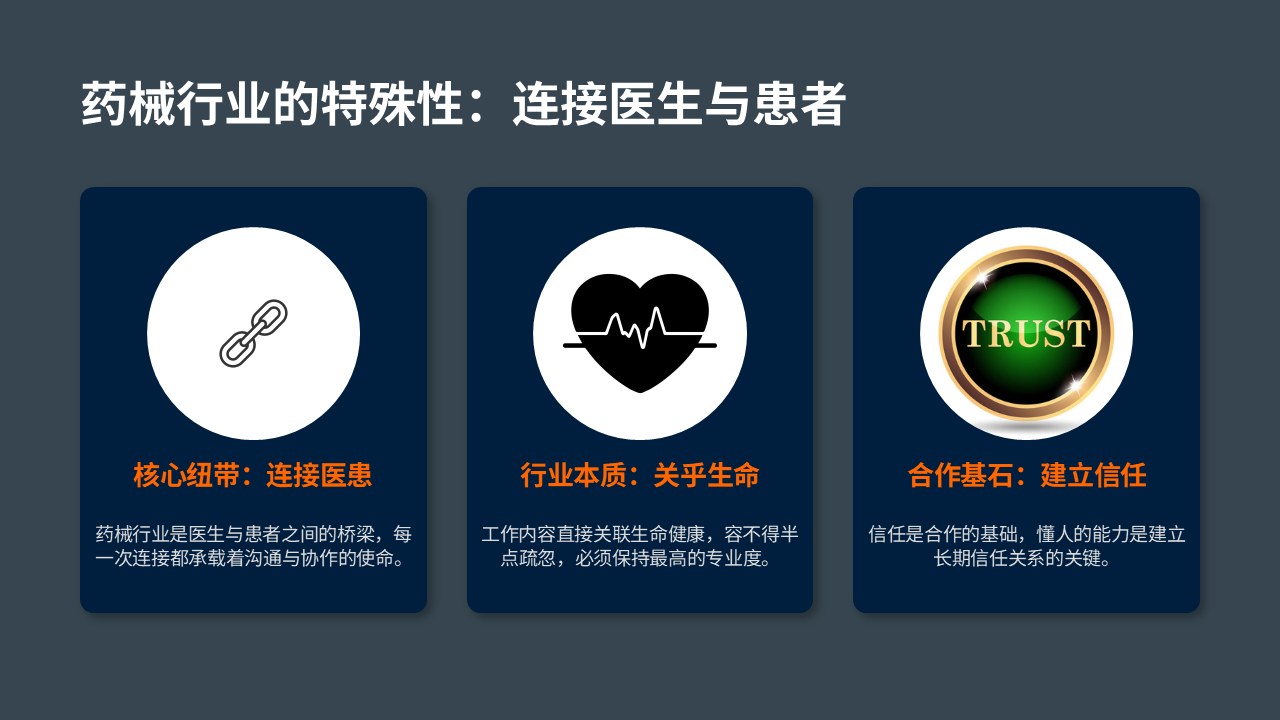
As the bridge between physicians and patients, trust is the only foundation for cooperation. The ultimate goal of digital intelligence is never for AI to replace people, but for AI to empower people.