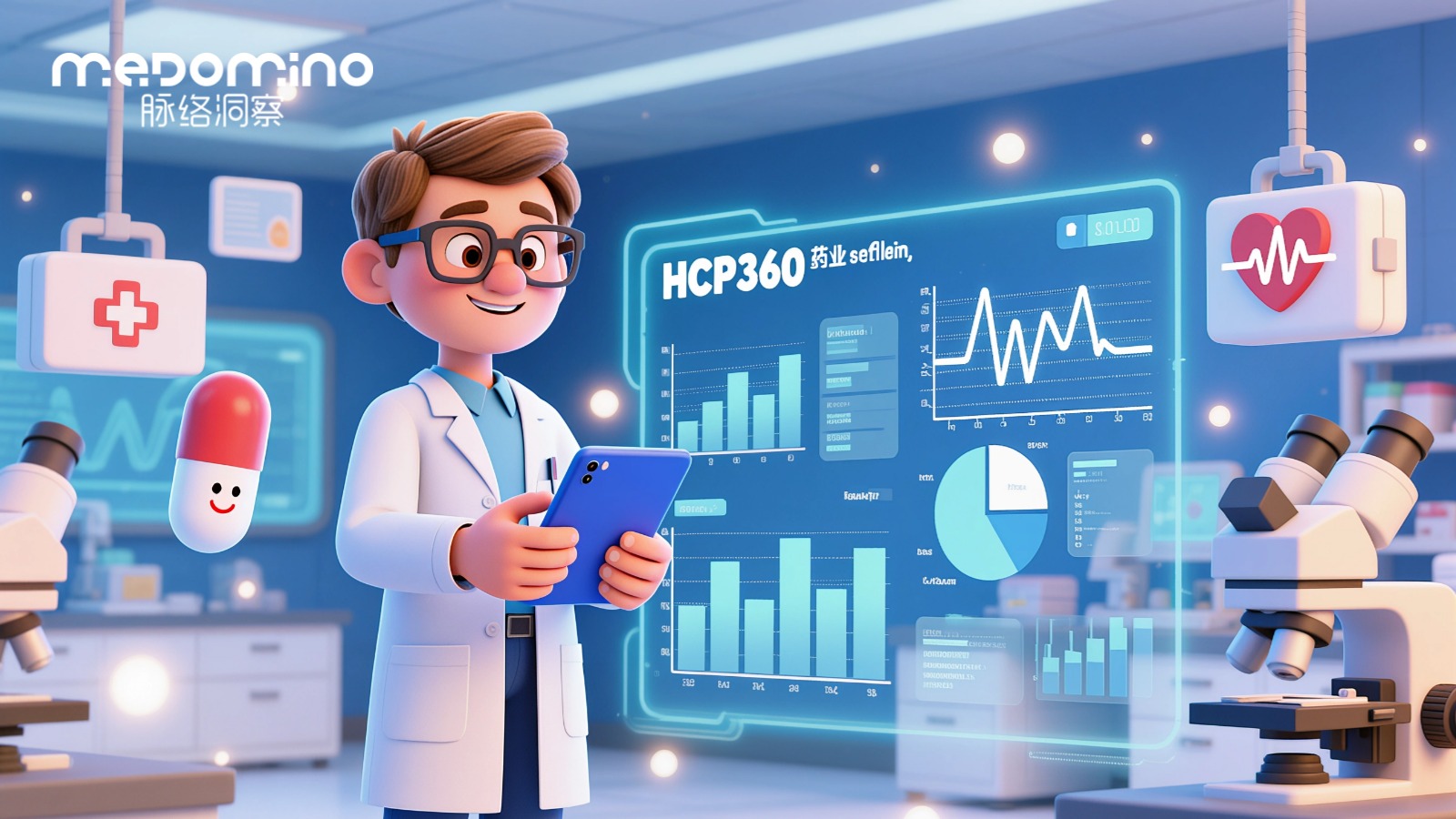
In the digital wave sweeping across the pharmaceutical industry, HCP360 physician profiling has become a key lever for precision marketing and academic promotion. By building comprehensive, accurate, and dynamically updated physician profiles, pharma companies can gain deeper insight into physicians' needs, preferences, and behavior patterns, enabling personalized communication and engagement while improving marketing efficiency and outcomes. So what exactly is HCP360? And how should pharma companies build effective HCP360 physician profiles?
1. Data Collection and Integration
HCP360 means a 360-degree customer profile for the life sciences industry. The first step in building an HCP360 physician profile is data collection and integration. Pharma companies need to collect data from multiple channels, including but not limited to a physician's:
- Basic information (name, gender, age, hospital, department, title, and more)
- Academic background (education, research achievements, publications, and more)
- Clinical experience (specialized disease areas, diagnosis and treatment cases, and more)
- Academic conferences and event participation
- Online consultations and more
During data collection, pharma companies can use professional HCP360 tools, such as MeDomino's HCP360 physician profiling tool, MeDomino HCP Navigator. These tools usually have large HCP databases and can provide real-time updated data resources, ensuring that collected data is accurate and timely. By working with professional tools, pharma companies can efficiently integrate scattered data and build a solid foundation for later profile construction.
2. Profile Construction and Analysis
1. Precisely Identify Target HCPs
Based on different business scenarios, pharma companies need to precisely identify target HCPs. During the R&D stage, for example, they may need to find experts or KOLs in a specific disease area for collaboration. In this case, HCP360 tools can be used to screen and rank KOLs in relevant fields. During the marketing stage, the goal is to accurately screen a large number of HCPs and determine potential customer groups.
Take MeDomino HCP Navigator as an example. It provides audience targeting capabilities that can screen, rank, and quickly retrieve target HCPs based on different scenario needs. Pharma companies can set screening criteria such as disease area, department, and title according to their own needs, quickly locating target HCPs with one click, whether for hundred-level KOL mapping during R&D or ten-thousand-level HCP targeting during marketing.
2. Group Insights and Individual Insights
When building HCP360 profiles, pharma companies need insights at both the group and individual levels.
At the group level, companies can understand the overall characteristics, needs, and preferences of target groups in a specific field, then develop targeted market strategies and promotion plans. For example, by using MeDomino HCP360 to understand physician group characteristics in a disease area, pharma companies can identify key influence factors and market opportunities in that field.
At the individual level, pharma companies need to dig deeply into detailed information for each target physician, including basic factual data such as position and education background, as well as academic activity data such as published papers, clinical trials, and conferences attended. With this data, companies can draw a unique profile for each physician, track their latest dynamics, and achieve the goal of finding the right person and saying the right thing in communication.
3. Relationship Network Analysis
The relationship network among physicians is also an important part of HCP360 profiling. By analyzing collaboration relationships and academic exchanges among physicians, pharma companies can better understand physician influence and collaboration preferences, then expand target groups.
For example, with MeDomino's HCP relationship analysis capability, pharma companies can understand collaboration information among physicians and quickly locate more target HCPs with similar collaboration preferences. They can also analyze HCP collaboration with competitors to understand cooperation forms, cooperation volume, and competitive dynamics, providing references for market strategy adjustment.
3. Personalized Communication and Engagement
Based on HCP360 physician profiles, pharma companies can conduct personalized communication and engagement with physicians. For different types of physicians, companies can develop personalized communication strategies and content based on profile characteristics. For academically oriented physicians, they can provide the latest research findings and academic information. For clinically oriented physicians, they can focus on clinical application effects, treatment plan optimization, and related content.
Communication channels can also be customized based on physician preferences. Some physicians may prefer receiving information through online platforms, while others may prefer face-to-face communication. Through MeDomino's precise profile analysis, pharma companies can provide each physician with the most suitable communication channel and method, improving communication effectiveness and customer satisfaction.
4. Continuous Optimization and Updates
HCP360 physician profiles are not static. They are dynamically updated over time. Physicians' personal information, academic achievements, and clinical experience all change, so pharma companies need to update and optimize physician profiles regularly.
By using the real-time data update capability of MeDomino HCP360, pharma companies can keep track of the latest physician dynamics and ensure profile accuracy and timeliness. They can also supplement and improve profiles based on interactions with physicians and market feedback, making the profiles more aligned with reality.
5. Conclusion
In short, when building HCP360 physician profiles, pharma companies need to fully use professional tools and data resources. From data collection and profile construction to personalized communication and continuous optimization, they should build a comprehensive, accurate, and dynamic physician profiling system. With professional HCP360 physician profiling tools such as MeDomino HCP Navigator, pharma companies can gain deeper insight into the needs and preferences of physician groups and individuals, achieve precision marketing and effective academic promotion, stand out in fierce market competition, and support sustainable growth.